Charlemagne was the hero of my history teacher at St Albans School when I was twelve, a certain Mr Solomon. His enthusiasm has stayed with me and I still see this great figure of German and European History as a colossus. What Europe might have been if he had had an inkling of succession planning, who knows? The squabbles after his death plunged us into more centuries of violence before the re-emerging Renaissance of the fourteenth century. Anyway this month I have finally found the opportunity to visit the cathedral at Aachen in Germany to try to re-imagine those first steps towards enlightenment.
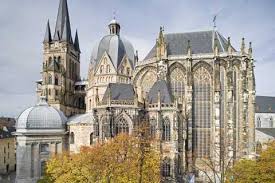
Aachen Cathedral is very different to the normal gothic edifices of Northern Europe. Based on Charlemagne’s original octagonal building it consists of three main sections. There is the oldest part of the building from the eight century, which is the octagon, showing the influence of the church of St Vitale in Ravenna. A cupola roof has been added later. A huge gothic choir (the Aachen glasshouse) was built at the east end in the fourteenth century, whose dimensions evoke the Sainte-Chapelle built in Paris a hundred years earlier. The west works were completed in the nineteenth century comprising a two story entrance topped with a neo-gothic spire.
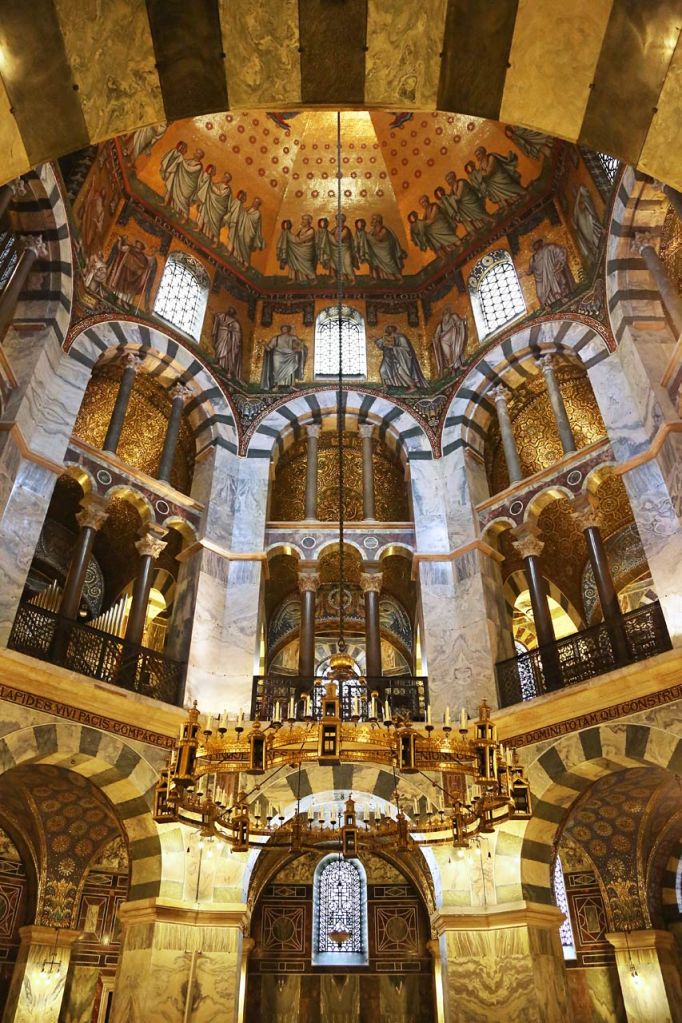
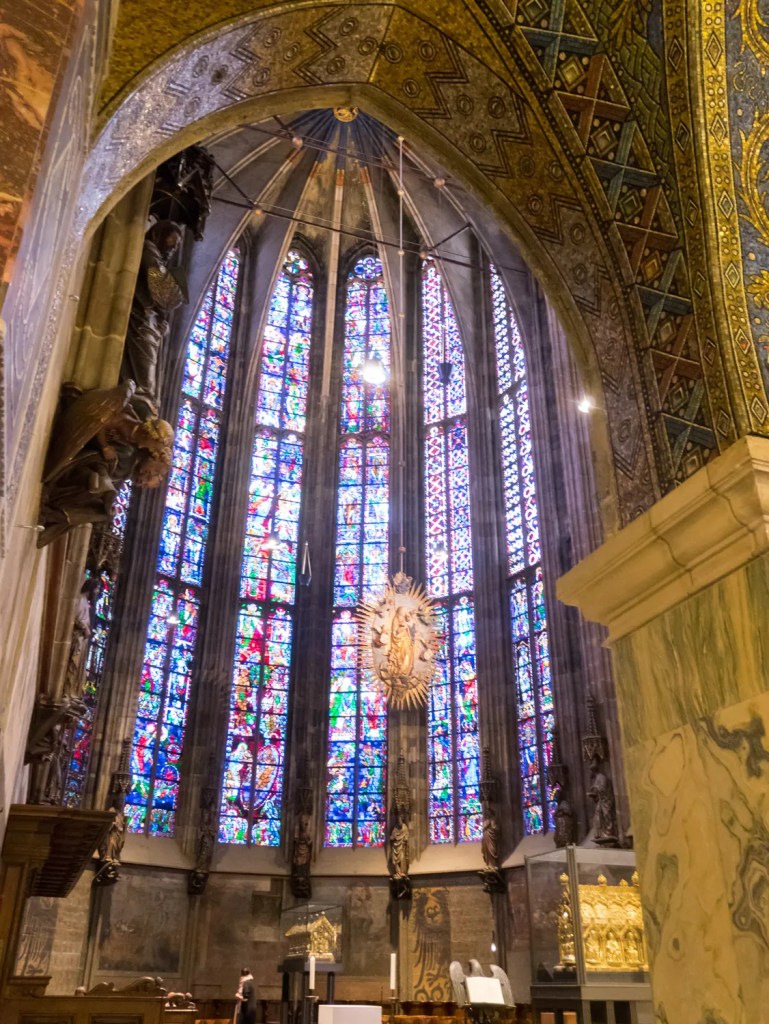
The interior is also stunning with marble walls, mosaic decorated vaults, stained glass and gold furnishings. There are gold shrines to the four relics of Aachen and Charlemagne in the choir and his original throne is placed on the upper octagon walkway.
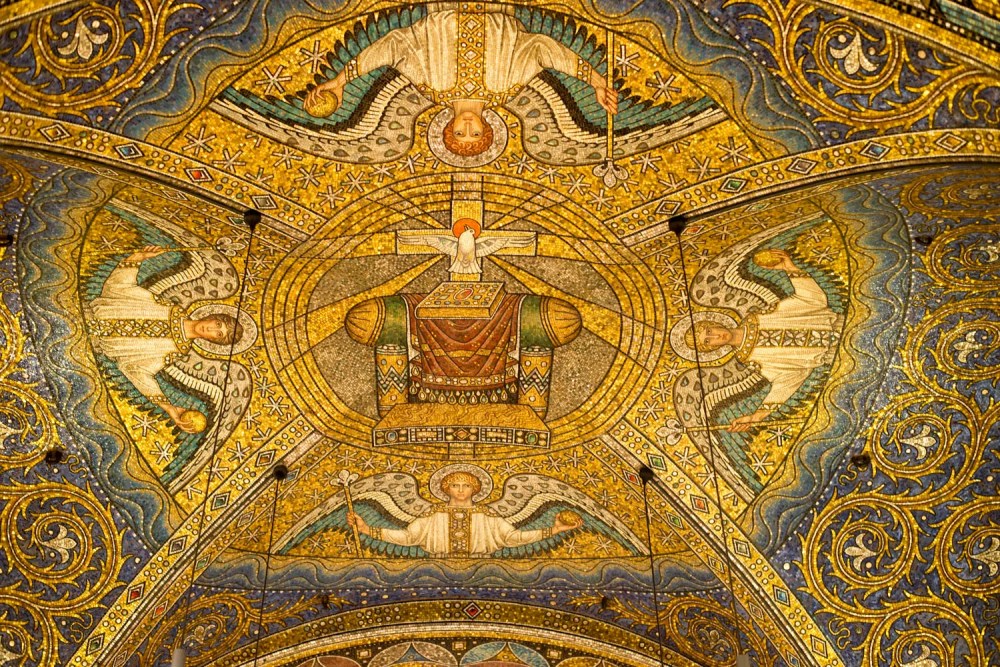
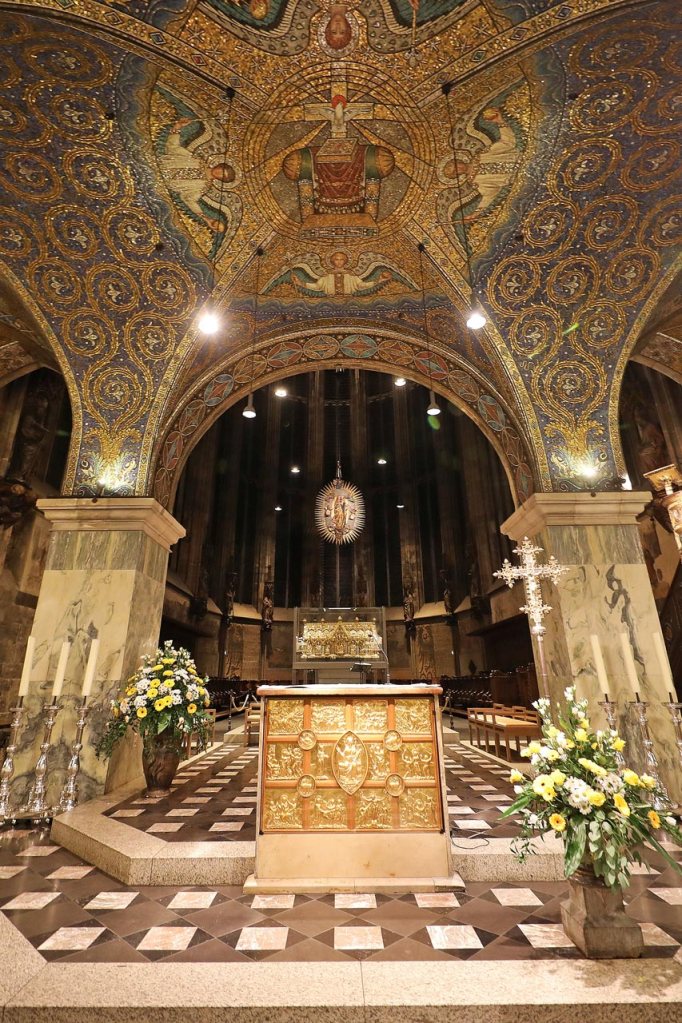
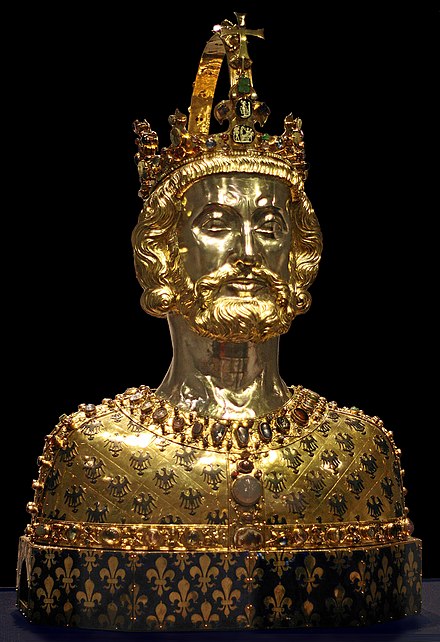
The Treasury next door was the subject of the remainder of our visit, housing some amazing medieval objects. There were paintings, ivory carved book covers, gold and guilt reliquaries, a gold bust of Charlemagne and most interesting to me a carved sarcophagus from the catacombs of Rome. It was of Persephone and once contained the relics of Charlemagne. These sarcophagi are the earliest evidence of Christian art so it seemed suitable that Charlemagne’s remains were brought here in this tomb. Following his canonisation in 1165 by Paschal III the gold shrine was created for his remains to be translated into.
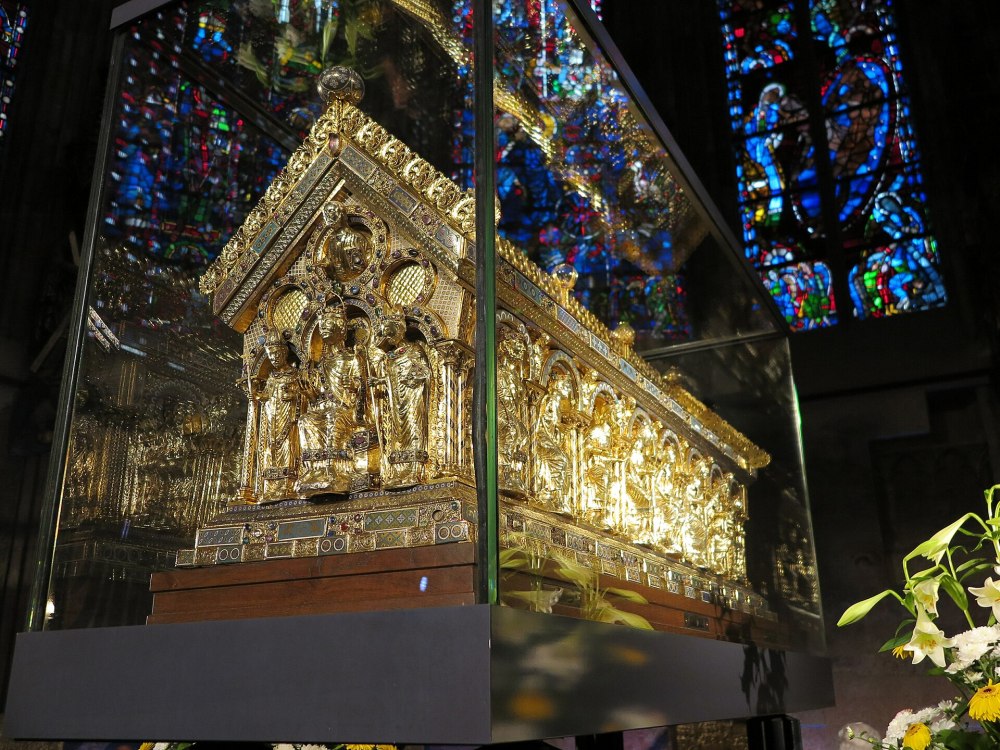
The four relics of Aachen in the Marian-Shrine in the choir include the swaddling clothes and loincloth of Jesus, the dress of Mary and the decapitation cloth of John the Baptist (if you are taken in by medieval reliquaries). These are removed for viewing as part of the ritual seven year pilgrimage to Aachen which has taken place since the Middle Ages.
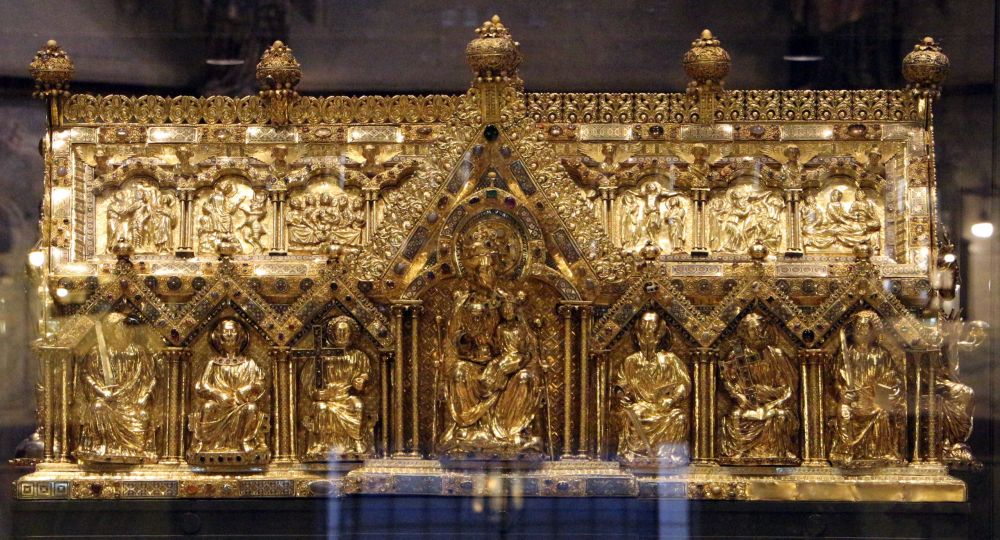
A wonderful visit and so evocative to see this cathedral which is so important to Europe’s fledgling re-emergence from the so-called dark ages.
 White Box Art Channel
Amazing photographs and thank you for such interesting information. X
LikeLike
great visit xx
LikeLike
Thank you.
LikeLike