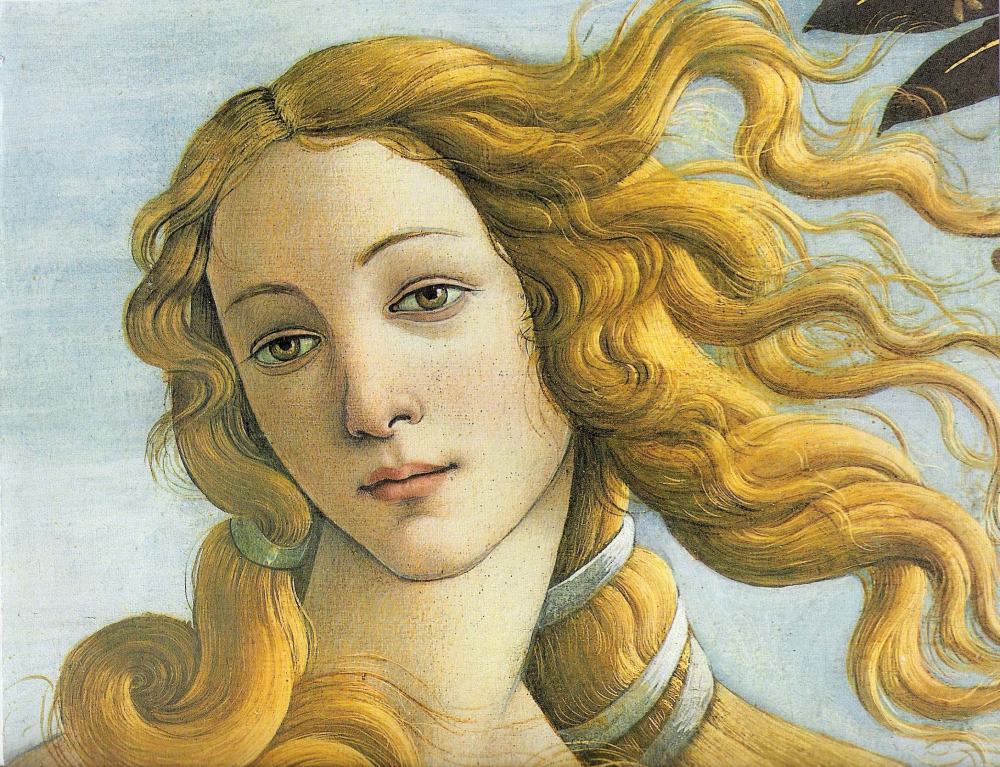
The Birth of Venus could be regarded as one of the most iconic paintings in Western Art, but is not without controversy. I have chosen it as my painting of the month for January for a number of reasons. Firstly it is also iconic for its representation of a new beginning; Venus appears from the sea at her birth as a fully grown woman. But secondly I have decided to return to Botticelli for my research project for this year. I studied the Florentine artist in my first year at Oxford University. Now ten plus years on I have decided to revisit the artist and in particular his secular and mythological works.
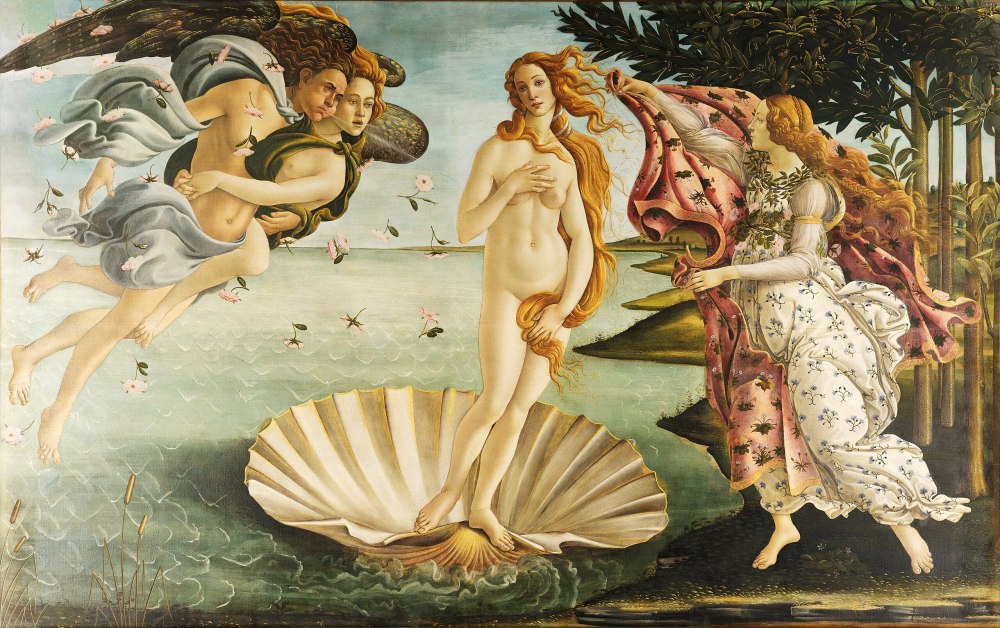
The Birth of Venus marked a new controversial beginning in quattrocento Florence. Most significantly the main character, the Venus Anadyomene (rising from the sea) was the first secular nude figure in western art since antiquity. Nudity was only to be found then in religious paintings, and especially limited to the Eve of the fall. So Botticelli’s Venus represented an important and controversial shift in taste.
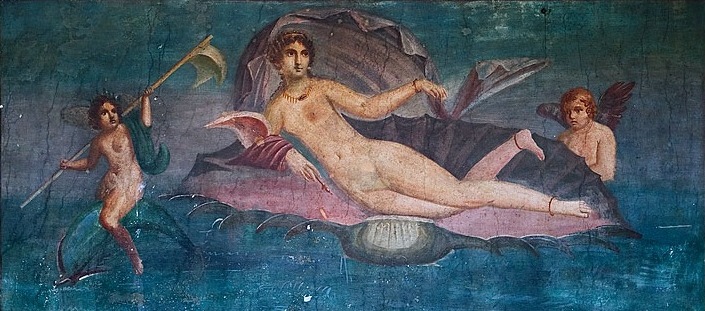
It appeared in parallel with a shift of thinking in Florence from scripture to humanism and a representation of Neo-Platonism. While the subject comes from ancient mythology and certainly linked to the poets Homer and Ovid, academics point to the actual inspiration as the quattrocento Florentine poet, Angelo Poliziano. In his poem the Stanze per la giostra, which commemorates a Medici skirmish in 1475, he may have influenced Botticelli with its multiple writings of the Horae and Zephyrs.
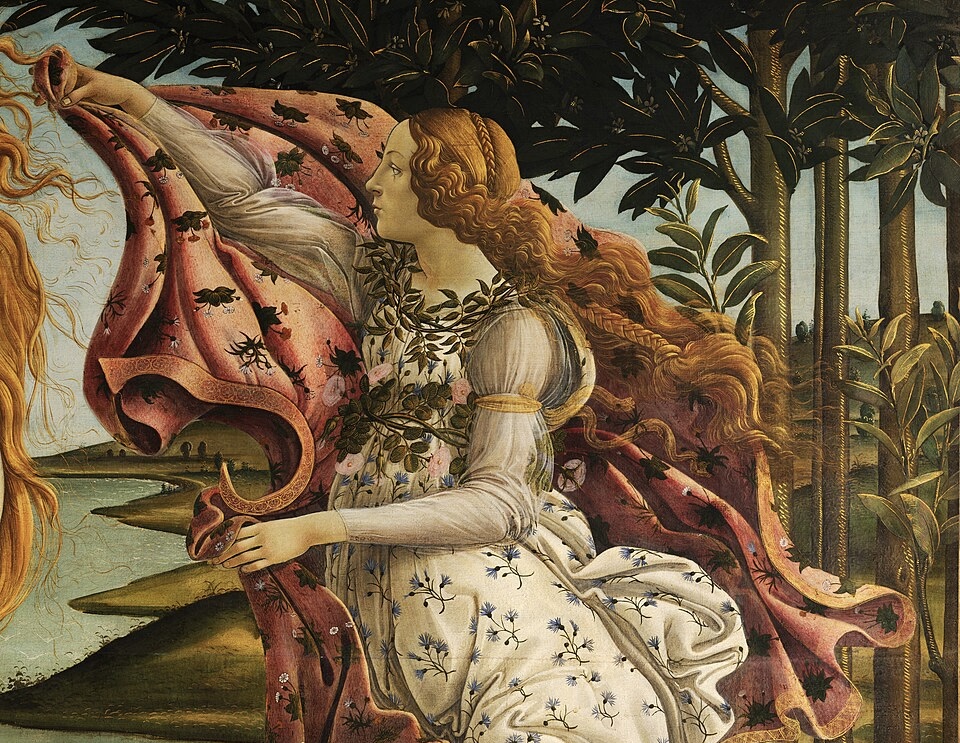
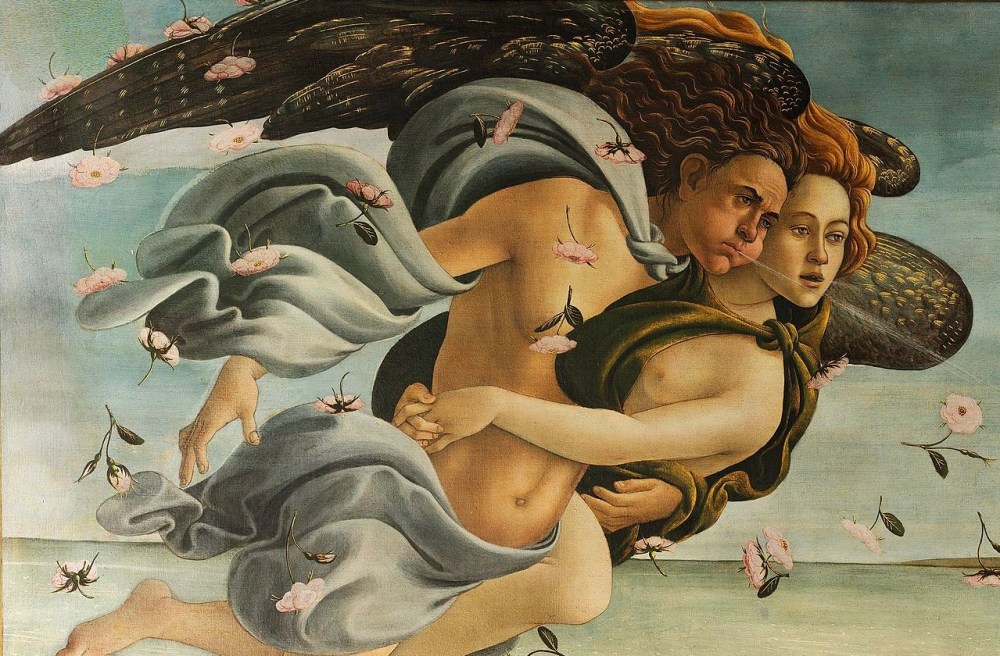
The construction of the painting contains three distinct scenes which have been testing art historians for centuries in their interpretation. The central scene is the Venus Anadyomene arriving in Sicily in an oversize scallop shell, itself a classical allegory of womanhood. Botticelli makes this view more interesting as the representing of Venus is in an impossible pose. It is also a masterclass in line drawing which would be Botticelli’s trademark. To the right the Hora stands ready to cover the nude Venus with her cloak as she lands at the beach. Some interpretations have this figure as Flora, maybe reference to Botticelli’s other great secular painting, The Primavera. The third scene on the left has Zephyrus blowing Venus ashore accompanied by Aura, also nude, or Chloris in other interpretations.
This great painting is also controversial having canvas as its support rather than the more traditional wood panel. of Florence. Challenging also is the idea held by some that Botticelli is linking religious thinking and humanism by interposing the Virgin Mary with the Venus Anadyomene.
The painting can be seen in the Uffizi Gallery in Florence. We last saw it seven years ago, on an away day, when we were studying in Venice. If popularity is a measure of a painting’s importance, then the Birth of Venus is matched only by the Mona Lisa, in Paris, for being difficult to see amongst the selfie visitors!
But more than worth the effort. Botticelli at his secular best; an example of the greatest exponent of ‘the line’ in western art and a wonderfully controversial painting!
 White Box Art Channel
What a wonderful post!
Thanks a lot for sharing 💝💝💝
LikeLike
Thank you, Luisa. Happy & Healthy New Year to you.
LikeLiked by 1 person
You are so very welcome my dear friend .
It’s my pleasure as always!
LikeLike
wonderful painting – mesmerizing
LikeLike
I’m glad you like it.
LikeLike
I think “the line” is exactly what I love about Botticelli. The flowing outlines containing flat colour make the paintings feel modern, almost like beautiful Renaissance comics!
LikeLike
Happy New Year Mark. Very astute observation. While Botticelli was probably the European master you must view some Japanese nineteenth century paintings if you have not already done so. There popularity accounts for the recovery of interest in the artist in that century, especially among the Pre-Raphaelite Brotherhood. Best wishes. Gordon
LikeLiked by 1 person
And judging by the number of selfie-takers I had to fight through, I’ll add Klimt’s The Kiss to the list of the most important paintings!
LikeLike
Indeed so. Did you see the painting in Vienna?
LikeLike
Thanks so much. It’s one of my favorites. I have been to Uffizi twice and loved spending some viewing time at the Botticelli exhibit. Also I did not know of the Pompei fresco. Good find!
LikeLike
Glad you enjoyed. The Uffizi is a great gallery, Gordon
LikeLike