Istanbul is a city we have been meaning to visit for years and we finally arrived a few days ago. But what to write about. The architecture of the old city is amazing from the Byzantine Hagia Sofia to the seventeenth century Blue Mosque. But I have chosen the Museum of Modern Art a few yards from our hotel in the Galataport area of the city.
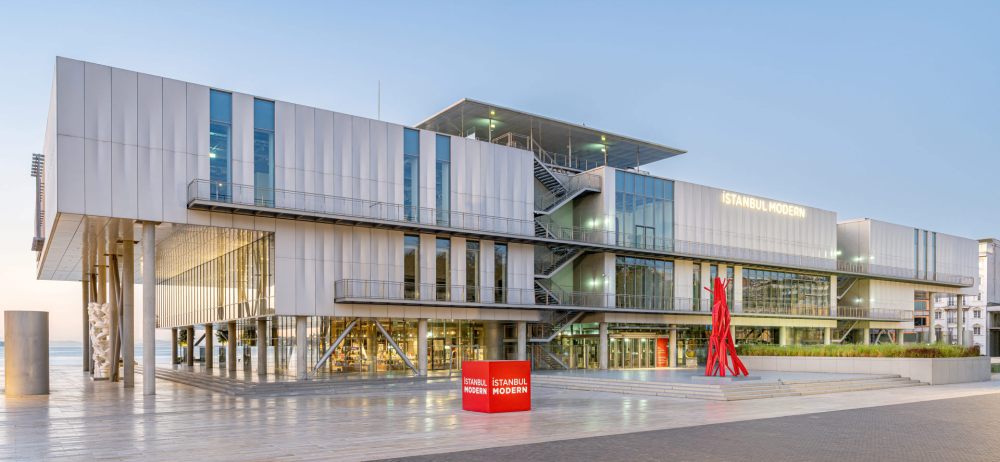
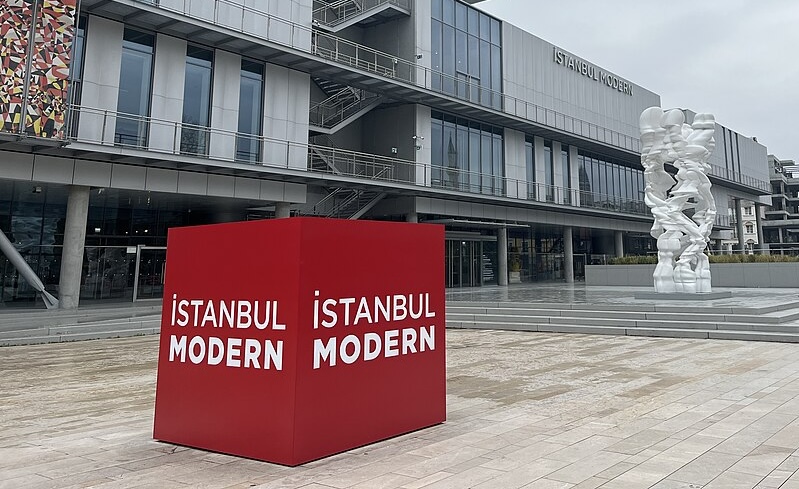
The Istanbul Modern is a wonderful twenty first century building designed by Renzo Piano, known for his work on the Georges Pompidou centre and The Shard in London. It was opened to great acclaim in 2023. I liked it as another example of the centrepiece of waterfront redevelopment as in Gehry’s Bilbao project. The area was a run down collection of warehouses until it was earmarked as a new cruise ship terminal. The development consists of a secure waterfront walkway, restaurants, bars and high end shopping malls. But the waterside focus is the Modern with its views over the shipping channels of the sea of Mamara and the Bosphorus linking Europe and Asia.

The facade of the gallery is composed of some 300 grey, concave and convex aluminum sections which reflect the changing colours of the Bosphorus. The architect likened this to ‘a fish leaping out of the water’ The design, along with the use of galvanized steel for the attached stairs and walkways is evocative of the site’s industrial and maritime heritage.
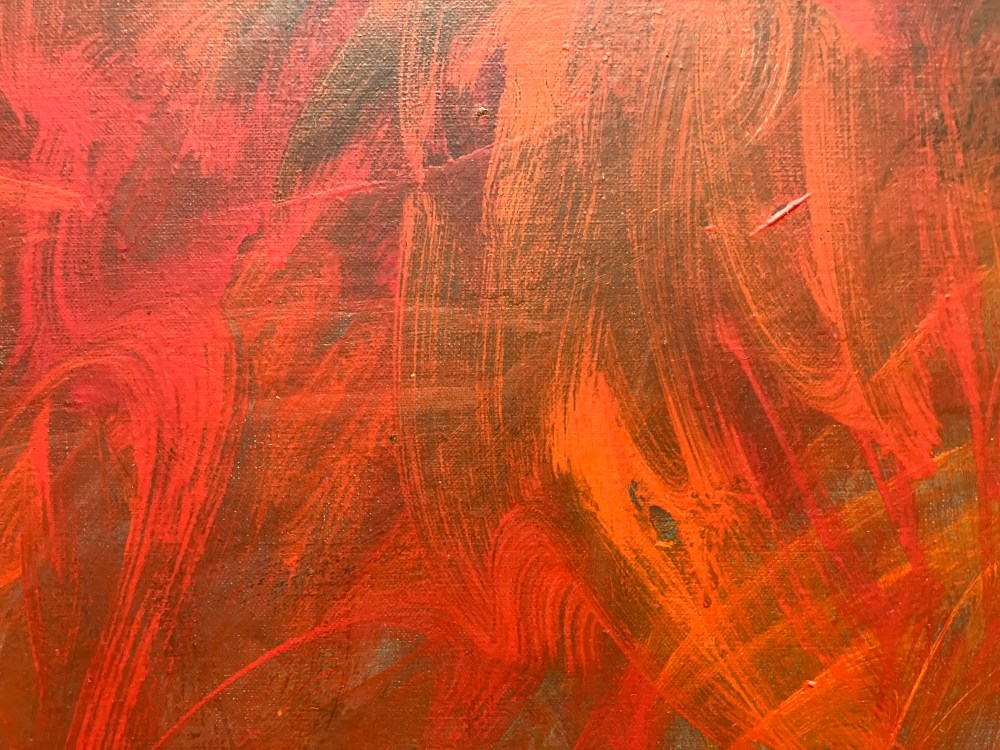
We visited the permanent collection which focussed on the contribution to Modern Art of artists from the Istanbul area. The collection is vast and varied and showcases the cosmopolitan ideals of the city. I was taken by a huge acrylic painting by Kemal Önstoy entitled Number 5. Born in 1954 in Eğridir, he graduated from the Istanbul State Academy of Fine Arts in 1980. He continued his studies in New York and returned to Istanbul in 1993.
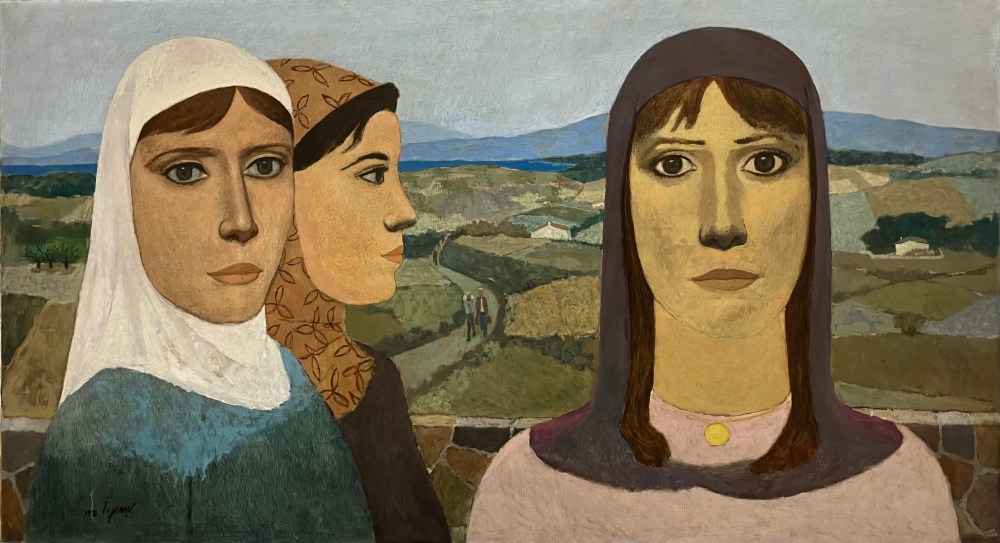
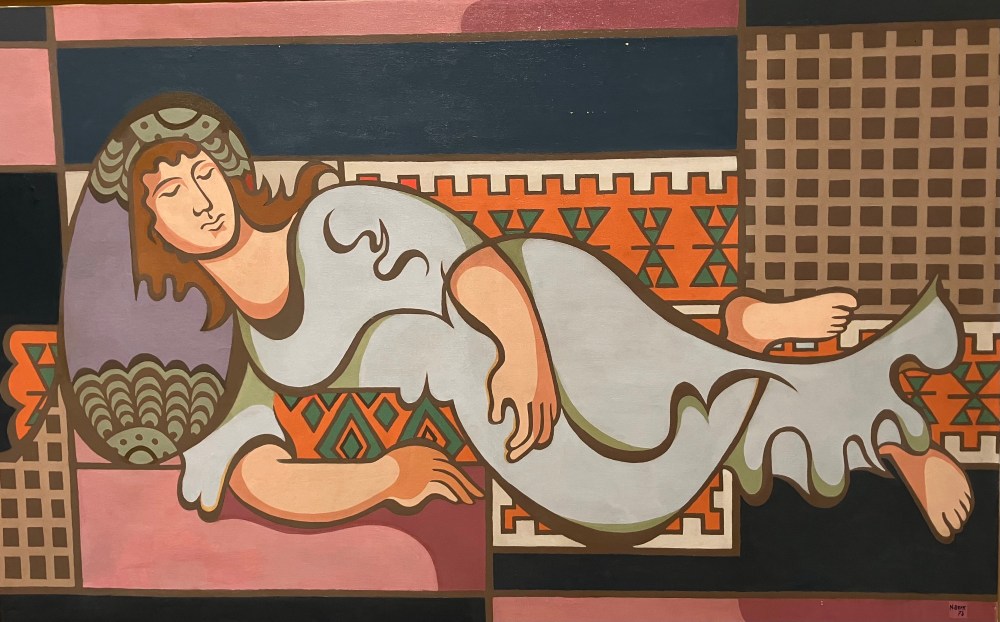
Peasant Women by Nuri Iyem (1915-2005) was one in a selection of paintings reminding me of the American Gothic Art. There were a number of portrait and figurative paintings that were clearly influenced by modern western ideas such as Sükriye Dikmen’s (1907-2000) Portrait of Aliye Berger. Sleeping Beauty by Nurullah Berk, 1906-1982 was in a similar representational figurative mode.
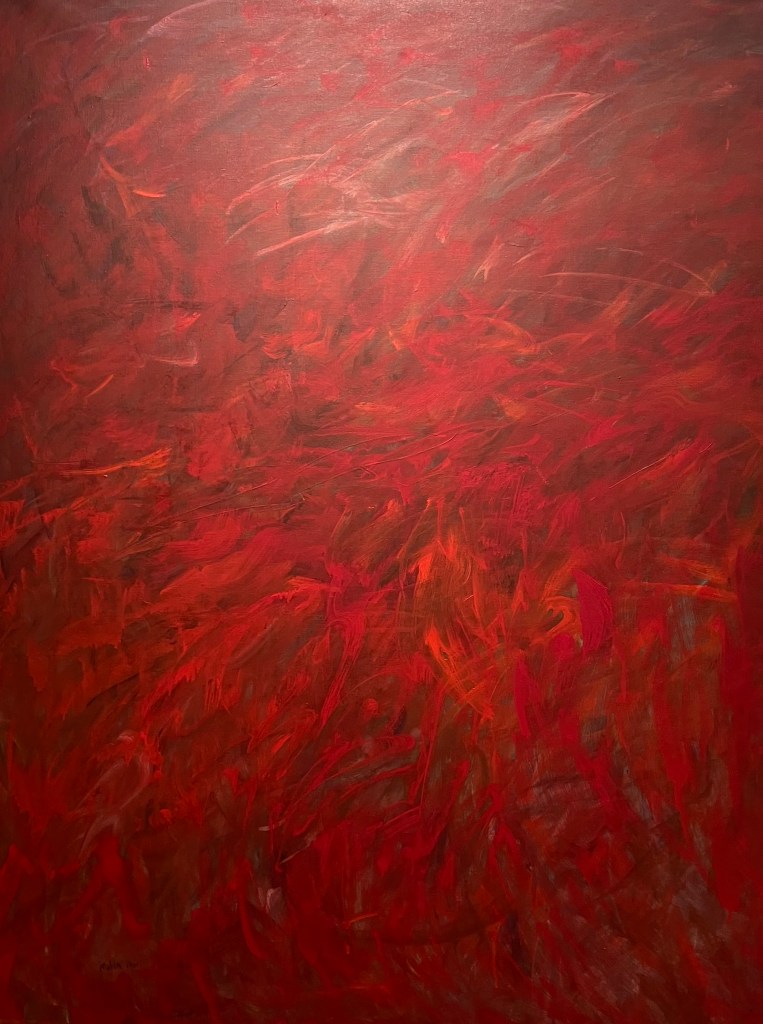
The collection fills the entire top floor of the gallery and is more extensive than I can do justice to but one work particular captured my imagination. Untitled by Mübin Orhon (1924-1981) kept me for several minutes as I studied it both from a distance and close up. Orhon studied in Istanbul and worked in Paris and this painting seems to reveal both centres. According to the gallery notes ‘The influence of Eastern philosophy, mystical stillness, and Rumi’s spiritual ideas are all present as well, but never reflected formally. It can be said that the artist opened a direct channel to Western abstraction, rather than following the efforts toward abstraction prevalent in Turkey at the time.’
We could have spent longer but with only a day and a half in the city we had to move on and enjoy more of the architectural delights.
 White Box Art Channel
I like these art styles
LikeLike
Glad you enjoyed
LikeLike