Last week we visited Kew Gardens. This was not our first visit but we concentrated on the Palm House this time as it will soon close for a major refurbishment. Decimus Burton and Richard Turner unveiled this astonishing iron‑and‑glass cathedral of the tropics in London in the 1840s. Even now, the great curving ribs overhead catch the light in that unmistakable way, as if the whole structure were the gleaming hull of a ship that has somehow taken root.
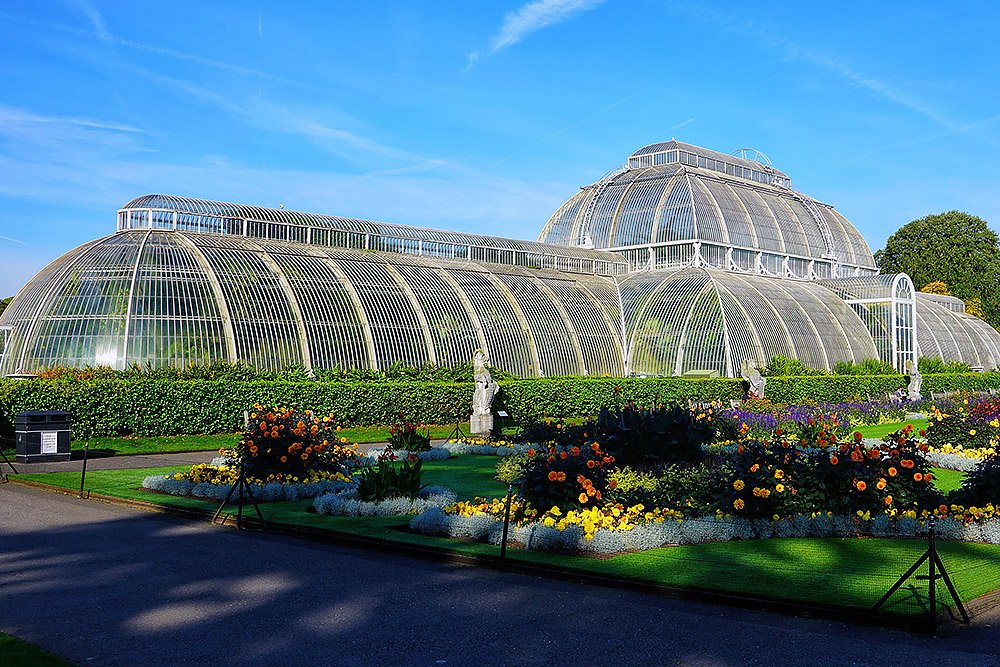
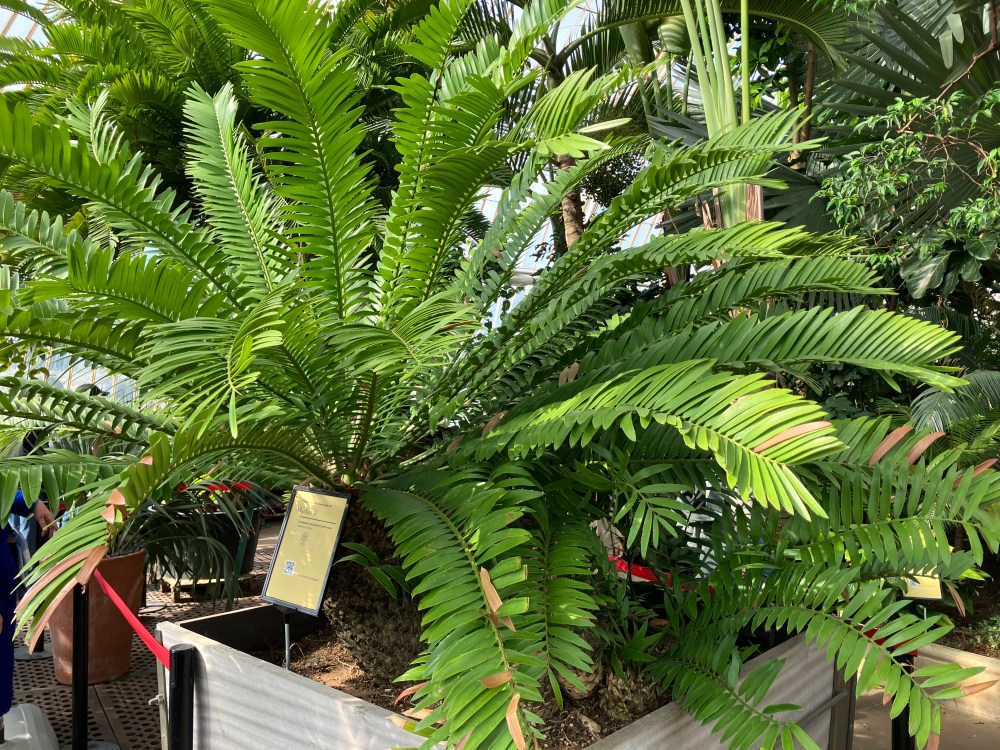
The doors of the Palm House exhale a warm, fragrant breath as you step inside, and the air thickens instantly—humid, green, almost velvety. It’s the same shock of climate that greeted those Victorian visitors so many years ago. We followed the winding path, brushing past plants that have outgrown generations of gardeners; some from the earliest days of Kew’s global collecting expeditions; others are the last survivors of habitats now diminished or gone. For example there is the venerable cycad—older than the Palm House itself, sitting in its pot like a quiet elder statesman.
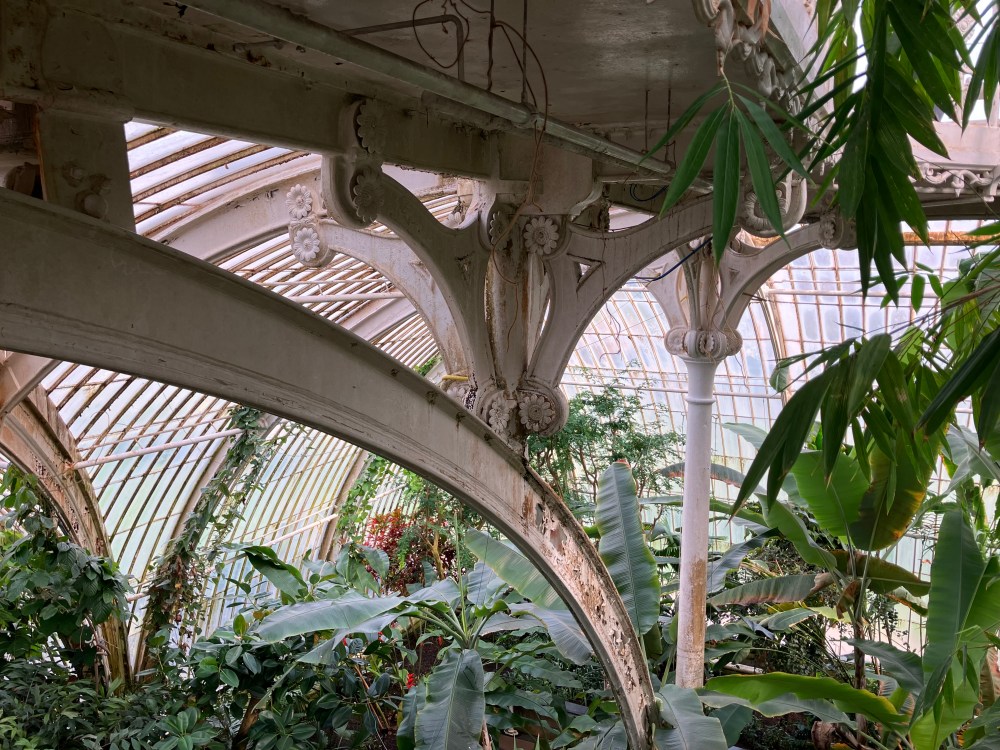
Climbing the spiral stair, the temperature rises with each step. From the gallery, the canopy spreads beneath you like a green tide, restless and layered. But the glass and iron above, beaded with condensation, also reveals the Palm House’s age. After nearly two centuries of service, it is preparing for one of the most ambitious conservation projects in its history. Thousands of panes will be lifted out and replaced; the ironwork will be repaired and strengthened; the environmental systems renewed for a changing climate.
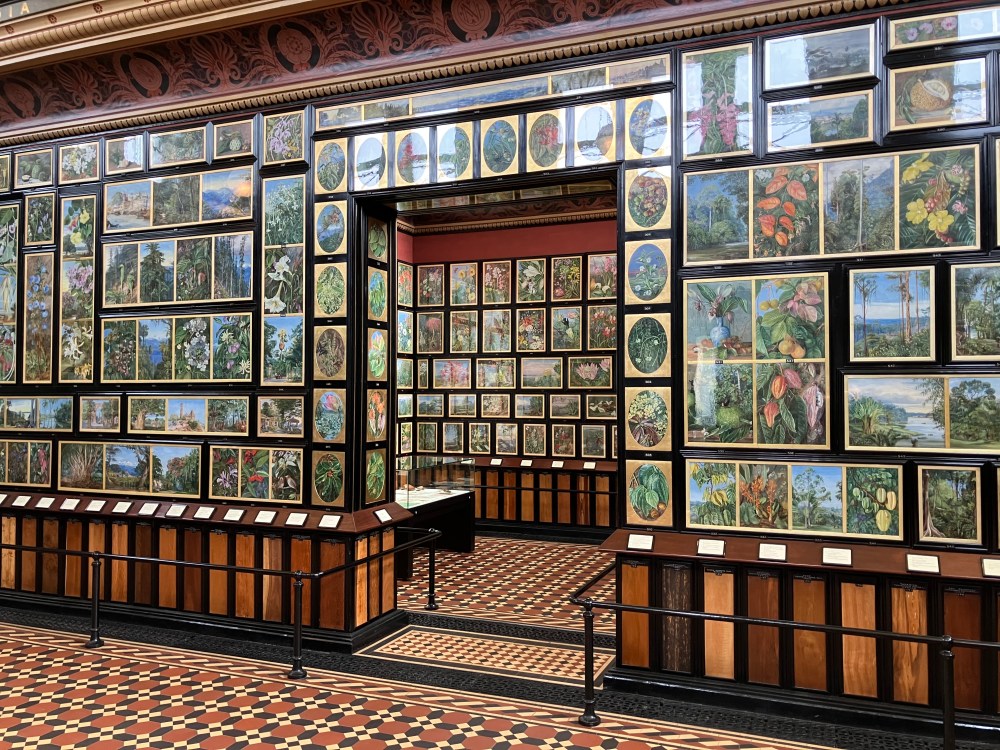
Stepping back into the cool air outside, we took the short walk away to the Marianne North Gallery which offers a different kind of immersion. Its exhibitions often explore the meeting point of art, science, and the natural world—botanical illustration, environmental change. After the sensory saturation of the Palm House, the gallery’s quiet, but fully curated spaces feel like a place to think, to reflect, to see plants not as towering presences but as subjects of study, imagination, and interpretation.
A little further on, the Shirley Sherwood Gallery of Botanical Art extends that conversation in a more contemporary register. At the moment, the space glows with the Singh Twins’ digital light‑box works—radiant, layered images that seem to hover between photography, painting, and something more elusive. Their pieces pulse with colour and luminosity, drawing out botanical forms in a way that feels both hyper‑modern and deeply rooted in the tradition of close observation.
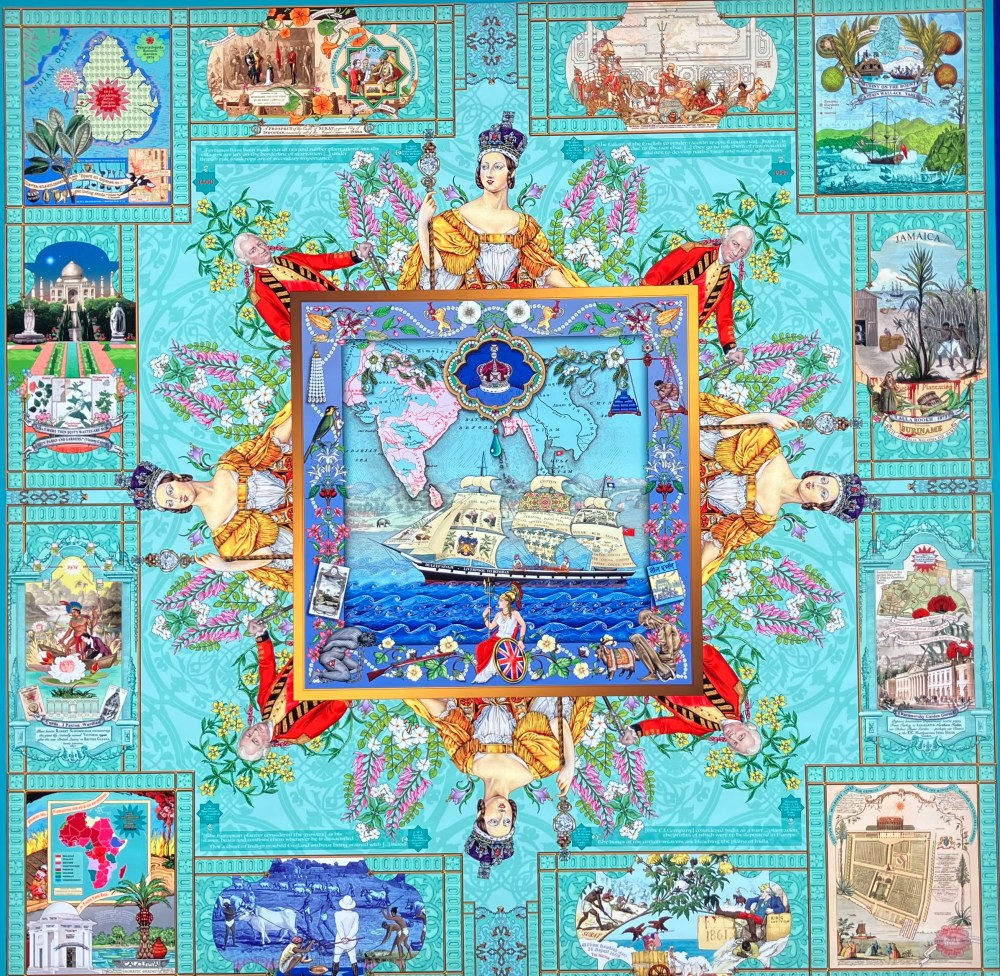
The exhibition casts a quiet spell. Visitors linger in front of the light boxes, drawn into their depth and detail. It’s a reminder that Kew is not only a garden but a place where art, science and history continually reshape one another—where the act of looking closely becomes its own form of conservation.
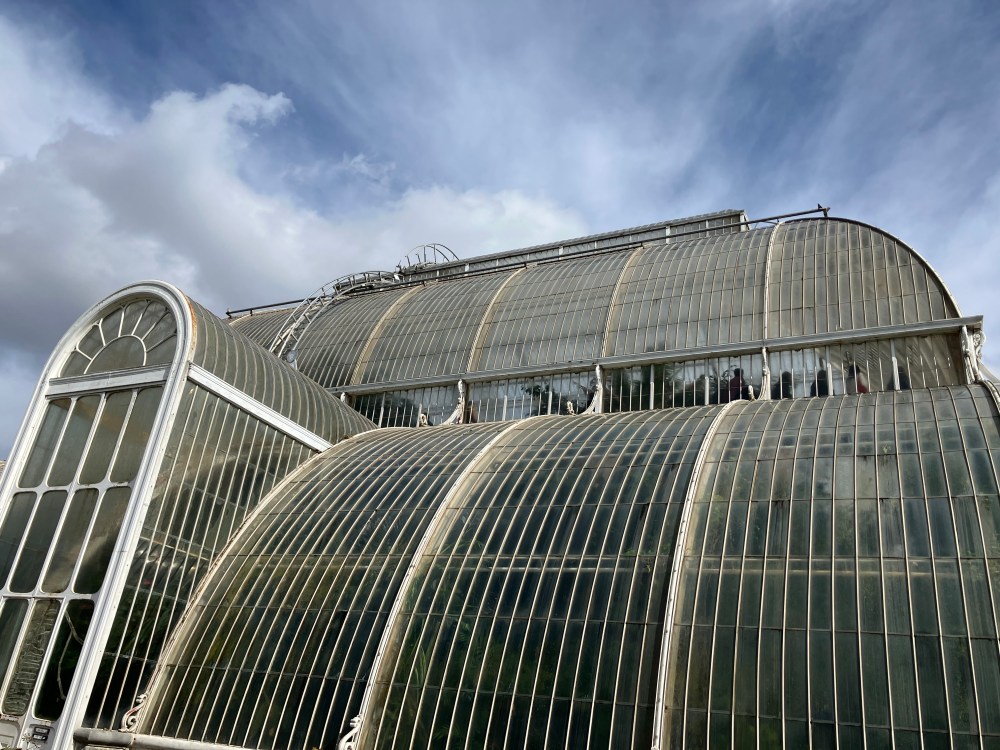
Before we left the gardens for some refreshment in Richmond we took a last look at the great Palm House, a last glimpse of its silhouette—those sweeping curves, that improbable Victorian optimism still held aloft in iron and glass. Soon it will be scaffolded, tended, renewed. We realise that Kew’s magic lies in this interplay: the living, the preserved, the imagined, all held together in one great landscape of curiosity and care.
 White Box Art Channel