Medieval abbeys, cathedrals and parish churches have been a great favourite of mine but I was reminded yesterday of another great building programme of that time. The castles across Europe are a heritage of the continent’s first great series of buildings in stone. The great feature of these castles is that what remains has not been substantially changed over the years apart from decay. They give a clue to how early stone buildings were constructed with massive walls and very small openings – both necessary for fortification purposes, but with the lack of engineering expertise building big and solid appeared to work.
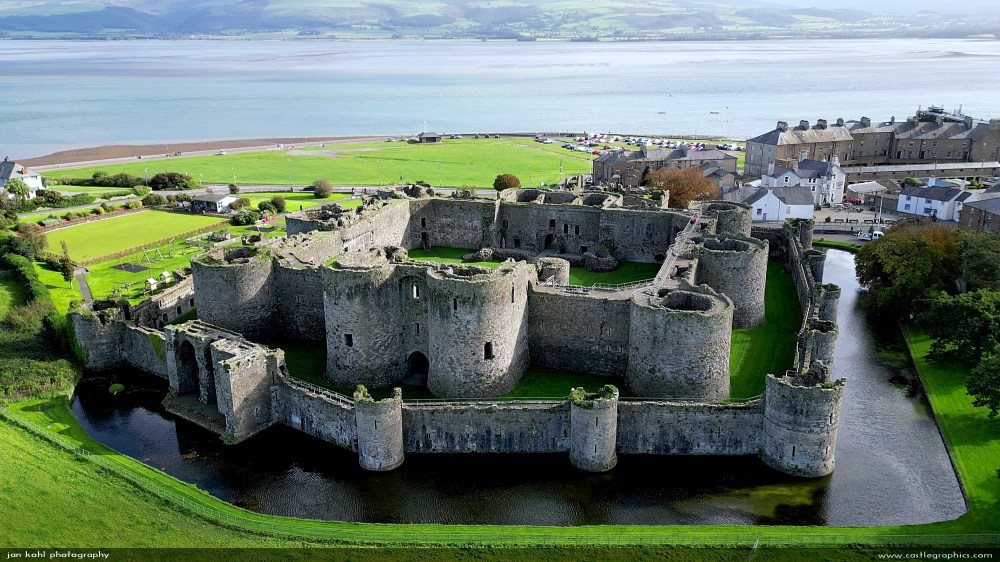
Beaumaris, on the south eastern corner of Anglesey, then, is my building of the month for June. What remains seems well preserved but conceals its secret that it was never really completed. The culmination of Edward the First’s programme in North Wales was the great castles of Harlech, Conwy and Caernafon. But Beaumaris was to be the crowning glory – the largest and most advanced of its day.

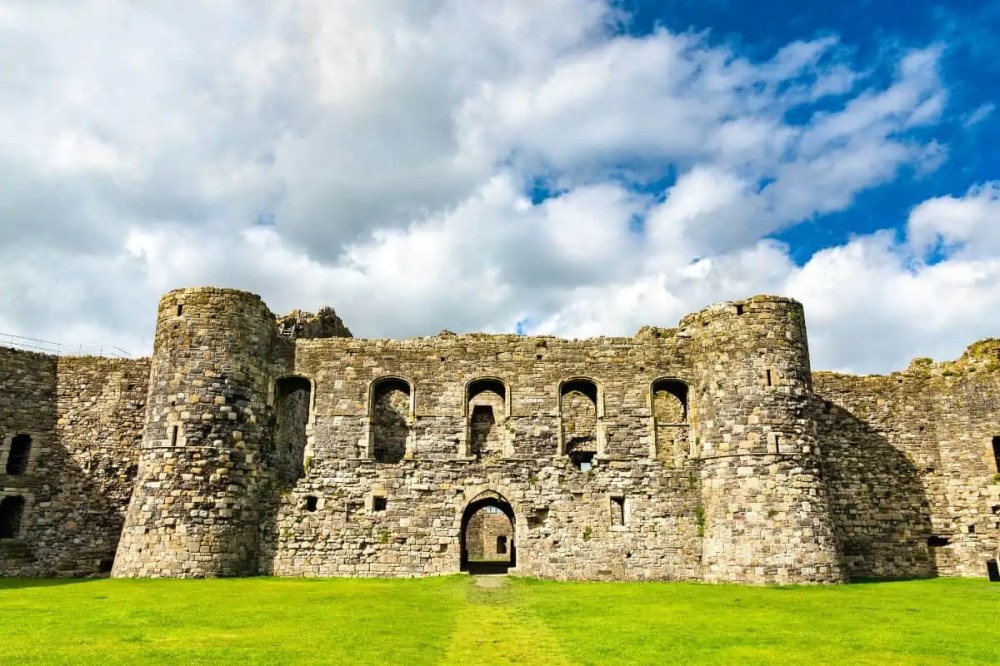
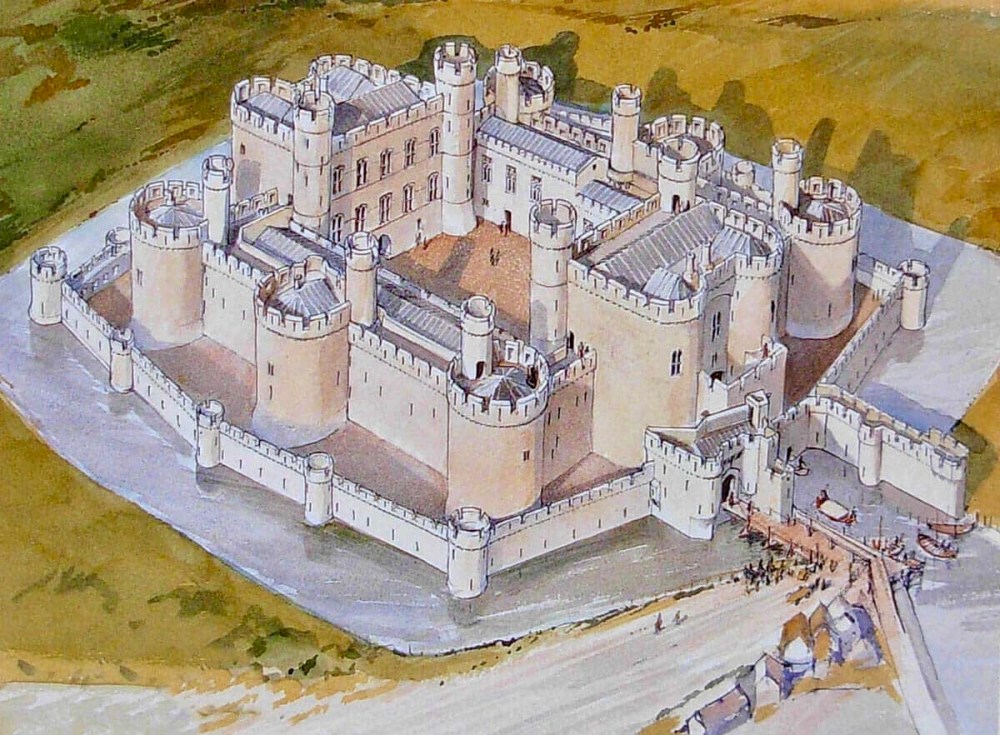
James of St George. It is unusual to have the name of the builder but James had been constructing castles his entire life and Beaumaris was to be his masterpiece. It consisted of two near perfect concentric symmetrical curtain walls with twelve round towers on the outer wall and six on the inner. The inner fortifications are completed by two huge gatehouses on the north and south sides. The north gatehouse, if completed would have been the largest in Britain and there were plans for a great hall on the third floor. There is indeed none of the third floor evident in today’s ruin.
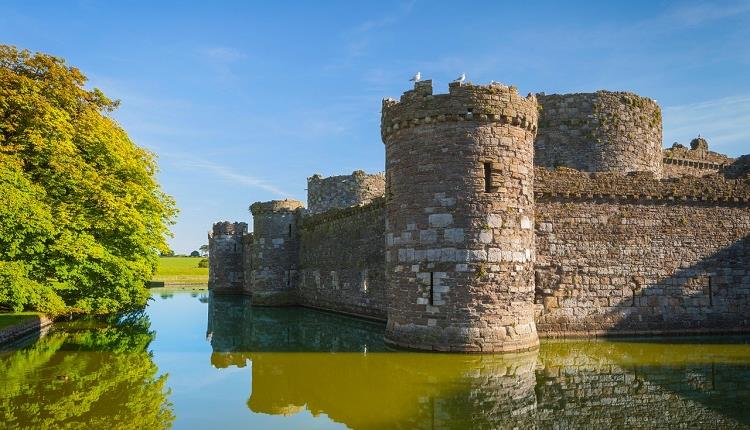
A final feature worthy note is the moat which is now only present on the west and south walls but originally surrounded the entire building. In addition there was a canal dug out to join the moat with the Menai Strait so the castle could be served by sea as well as land. An additional feature is the Barbican and a spur known as the gunners walk which gave protection to the sea port.
Beaumaris Castle was built with breathtaking speed from 1295 to 1306 and over 400 masons and 2,000 labourers were employed. This accounts for the continuity in the design throughout the building. By 1306, though, the money was running out and the political focus changed away from Wales towards Scotland. It is unlikely that any wages were paid in the final year.
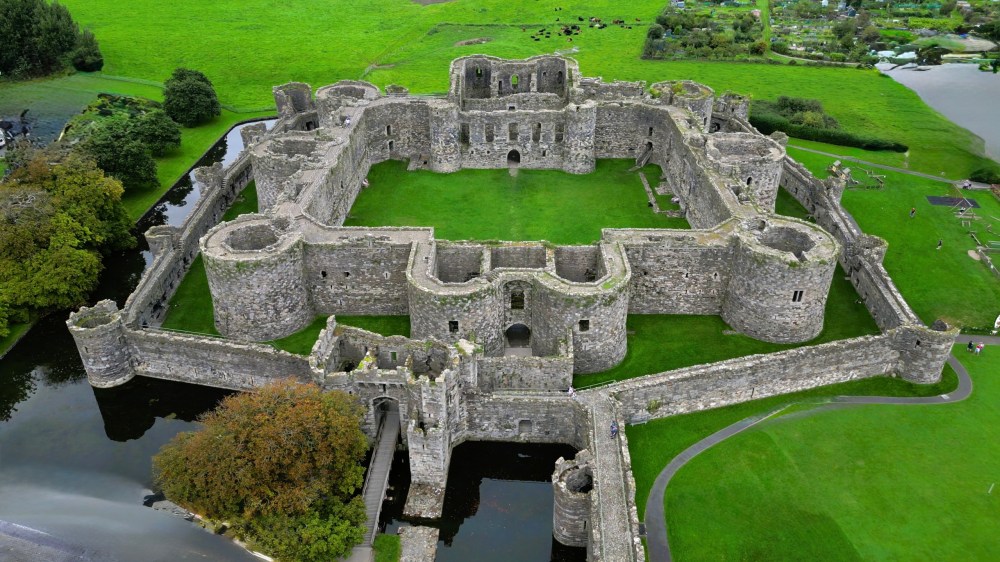
The castle was garrisoned again in the revolution of Owen Glyndŵr in the 1400s and in the English Civil wars of the seventeenth century. Unlike many castles Beaumaris was not slighted (destroyed) after this war by Cromwell’s troops and so remains as a great visual attraction today. Much of the final restoration took place in the mid twentieth century by the state after adopting the site from the Bulkeley family, and is maintained by Cadw on behalf of the Welsh Government.
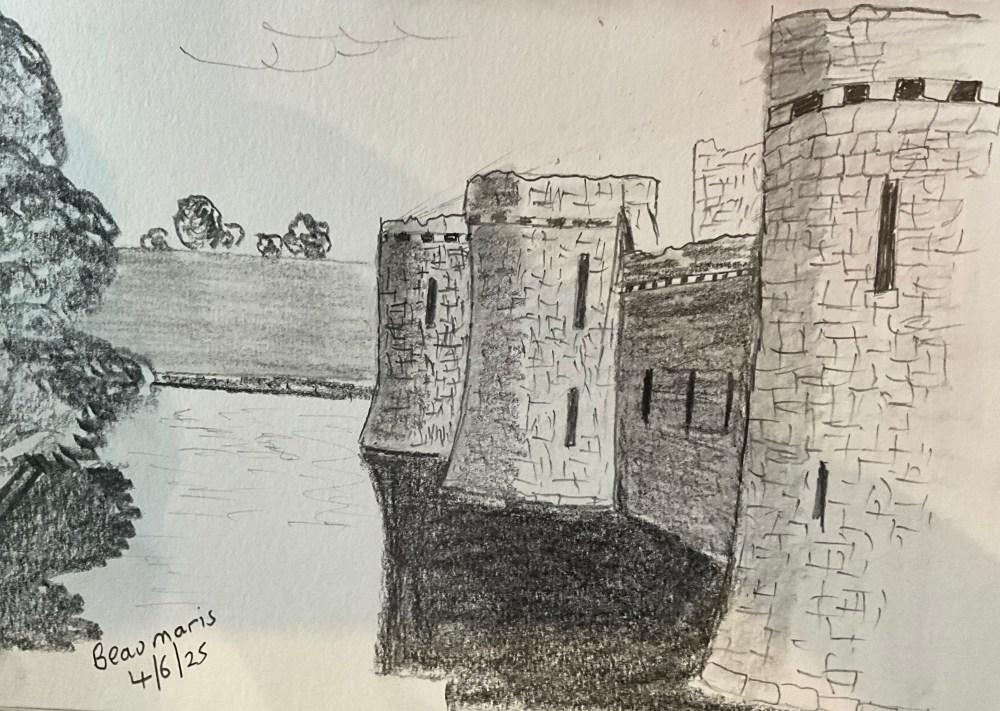
A little off the beaten track now as most people fly to Dublin but well worth the visit, especially when the sun shines on the stone as it did yesterday.
 White Box Art Channel
different historical significance to sacred buildings but equally (if not more in my opinion) important and brilliant. Pleased to hear funding support for these that are not on the beaten track.
LikeLike
Thank you for your comment
LikeLike