Last week we visited the village of Kelmscott and found the wall paintings in St George’s Chapel. The church, a modest limestone building from the fourteenth century, standing quietly beside the Thames meadows is one of the most atmospheric small churches in the county. Its simplicity is part of its charm: a building that has never been heavily restored, never enlarged beyond its medieval footprint, and never lost the sense of being the spiritual heart of a rural community.
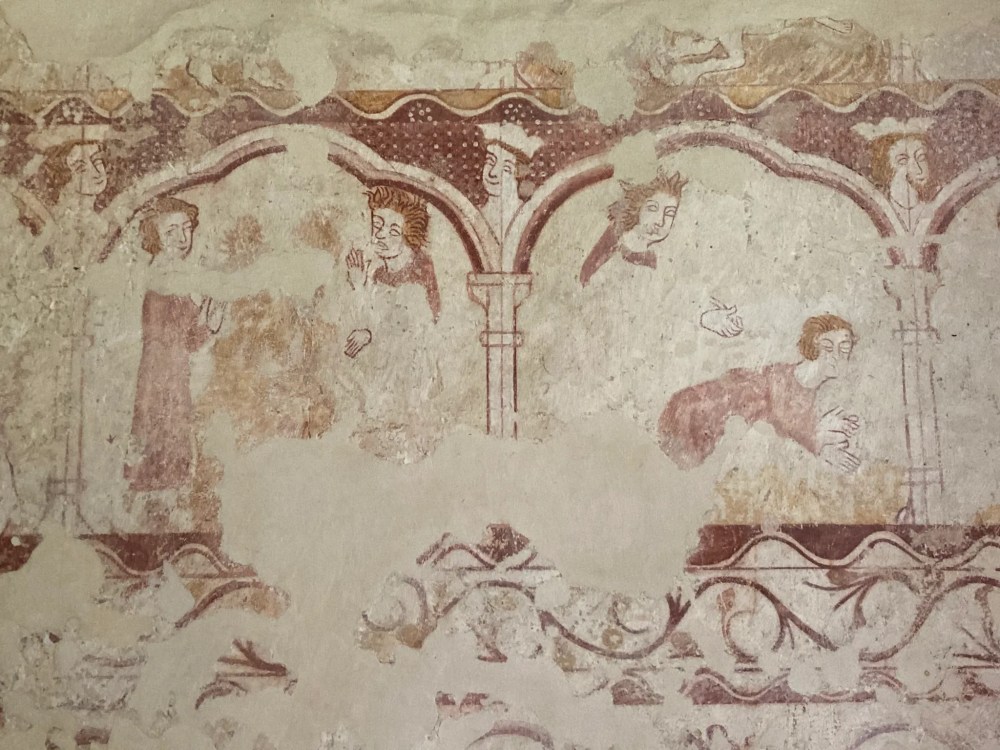
Most important to us were the seven hundred year old wall paintings in the north transept. These paintings were hidden under whitewash for centuries, only rediscovered in the late 1800s. What survives is a fragmentary, but still powerful collection of medieval murals which were part of the rhythm of worship, not the gallery paintings which they have become.
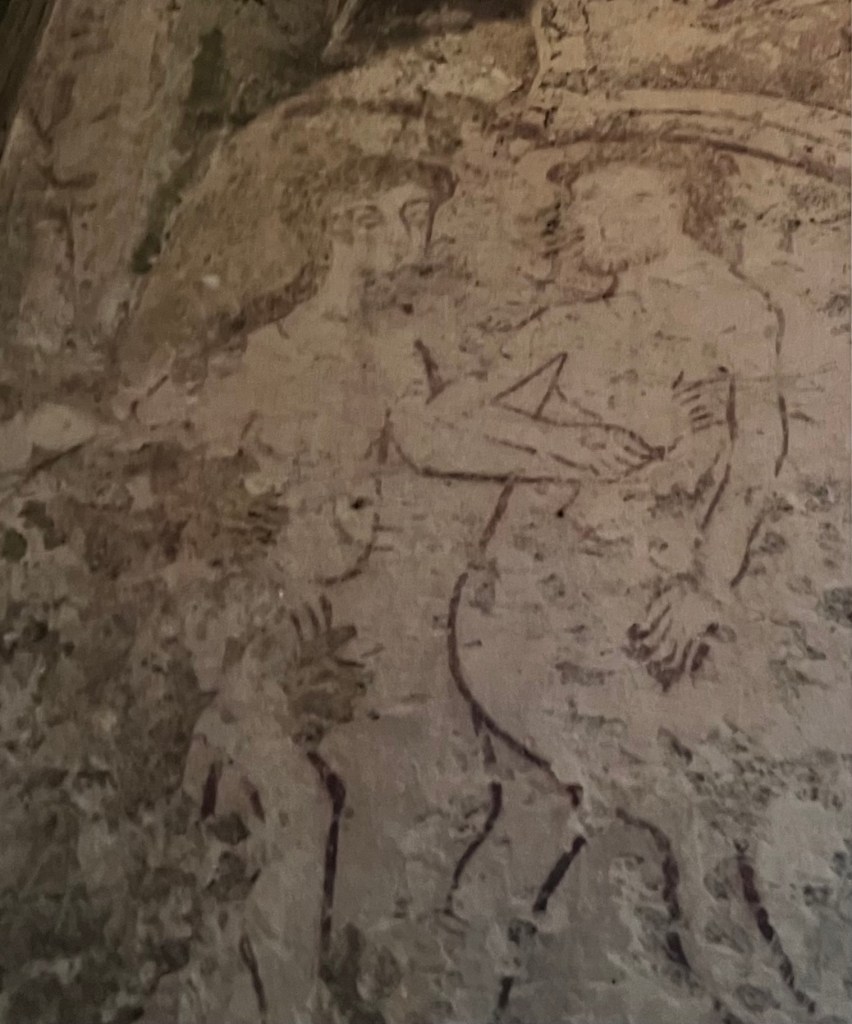
Although many scenes are incomplete, enough survives to recognise the themes. On the west wall we see scenes from the Book of Genesis and in particular the story of Cain and Abel. Old Testament cycles are uncommon in English parish churches, this story particularly so, making it a precious survival. Remaining are images of a figure raising an arm in anger, a kneeling brother offering a sacrifice and the outlines of a simple altar. The representation is the moral tale about jealousy, violence, and divine justice.
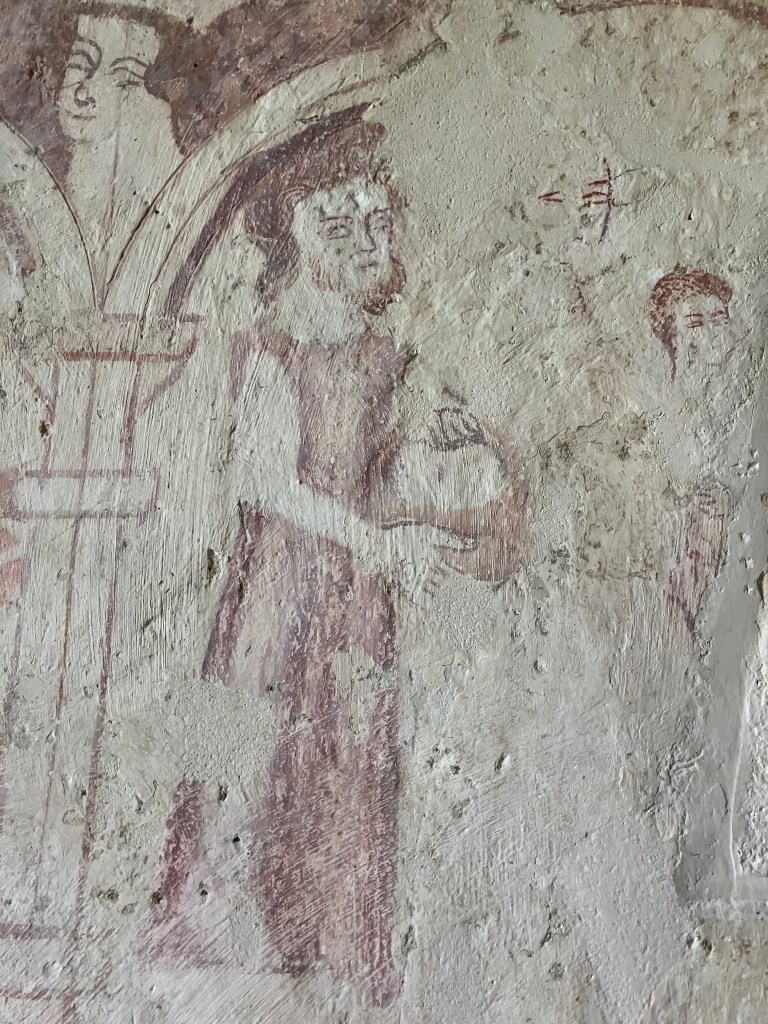
On the east wall are scenes from the Life of Christ from the New Testament. Although only parts remain it is possible to see draped robes, haloes and the architectural backdrops. The scenes would have guided the medieval worshippers through the central mysteries of the Christian year.
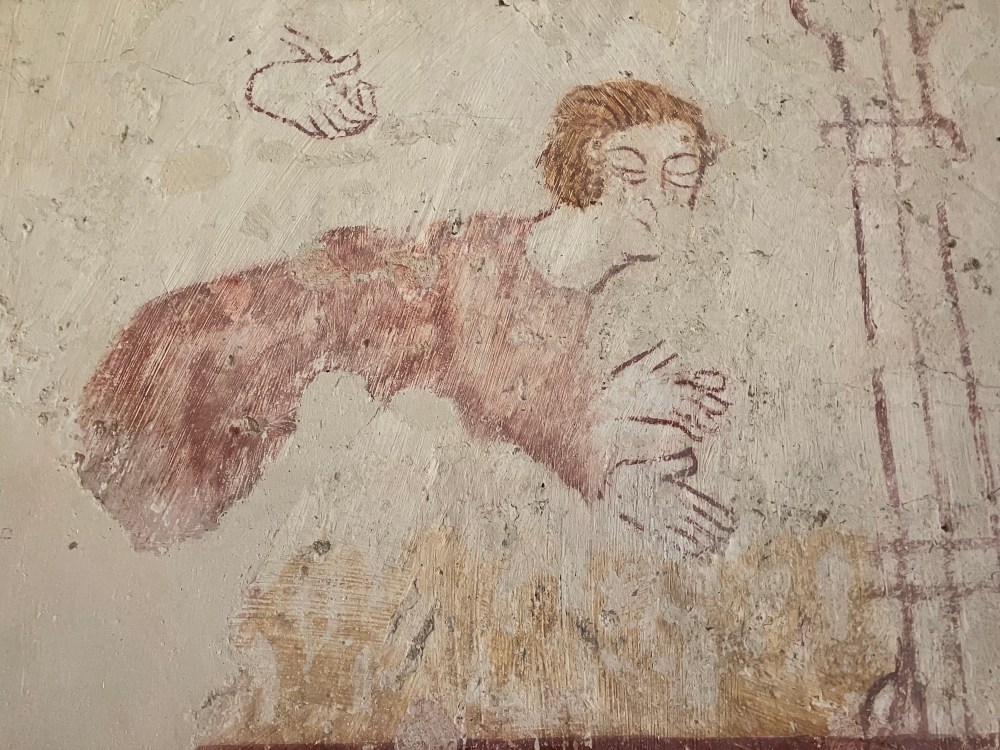
Above the west window are traces of a doom painting, a much more common sight in English churches. It depicts Christ judging the world at the end of time. This was once the most dramatic image in the church, facing the body of the congregation, reminding parishioners of the choices that shaped their souls.
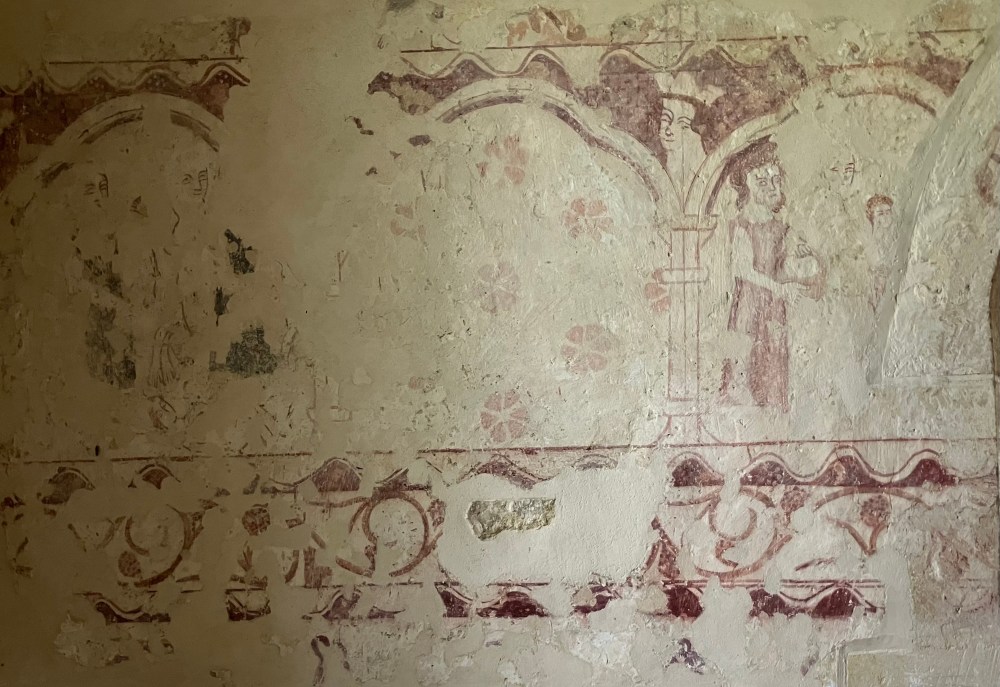
The structure of the paintings are rows of painted arches, like miniature church windows, each containing a separate scene. Deep red ochre, the dominant medieval pigment, gives the whole chapel a warm, earthy glow. Crowned heads peering from the spandrels and slightly mischievous faces once framed each vignette.
The church is best known today because of William Morris, designer, writer, and founder of the Arts and Crafts Movement, who lived nearby at Kelmscott Manor and worshipped here. The house always seems to me more of a commemoration of the lives of his wife Jane and daughter May and the family graves lie in the churchyard.
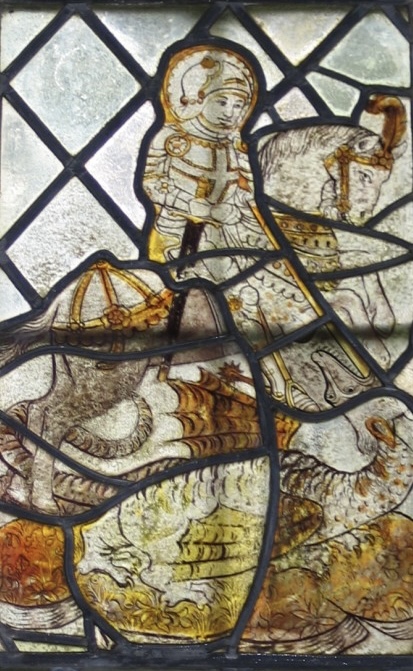
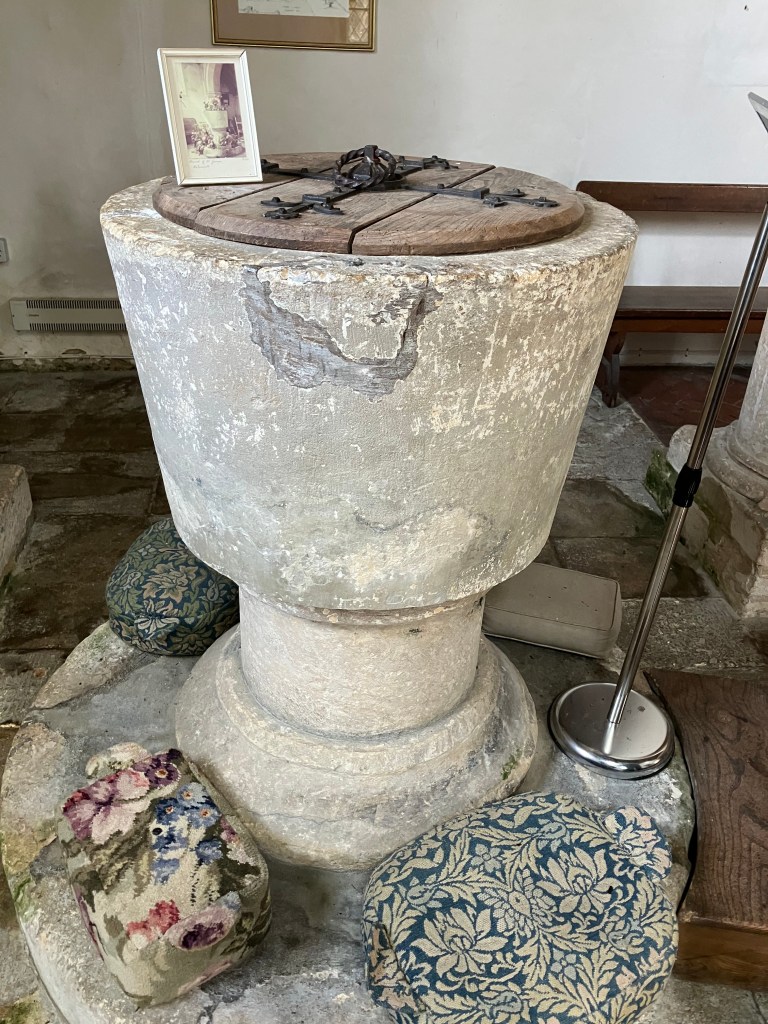
But St George’s is much more than just a Morris pilgrimage site. It is a rare survival of a medieval parish church that still feels medieval. As well as the paintings there is a very ancient font and a near complete fourteenth century stained glass panel depicting St George in the east window.
*
Images created by the author
 White Box Art Channel
a beautiful church that really represents its history in a simple peaceful setting xx
LikeLike
Glad you like it
LikeLike
Dear Gordon and Susie I enjoyed reading this as Kelmscott was one of Geoffrey’s and mine favourite places.
As you can see below I have finally made it to London as from last Saturday! So perhaps we can meet when you’re next in town… Hope all is well Love
LikeLike
Thanks Victoria. That is great news Well Done xx
LikeLike
Thanks Gordon – we have visited Kelmscott a couple of times and walked the wonderful paths close to the Thames but never visited the church .. next time we will.
LikeLike
It is well worth the visit. Like everywhere else in that part of the Thames Valley – so peaceful.
LikeLike