Forde Abbey, in Somerset, is the perfect example of a living evolving building. It has seen much change in the last eight hundred years and is still very much alive as a family residence and an example of our national heritage.
There was probably a building here before the Cistercian monks arrived in the twelfth century but they put Forde firmly on the map. When the Cistercians arrived in England they set up their mother monastery in Waverley in Surrey. They were then given land in Devon by Richard de Brioniis in 1140. Sadly he died, as did the abbot and the land was too barren to make a living. The monks set off to return to the motherhouse in Surrey but divine intervention took hold and Richard’s sister gave them the land in Somerset, where they set up the monastery and built their abbey.
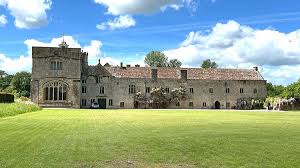
The monastery became one of the richest in England and the last of the many abbots, Thomas Chard, started a refurbishment in the sixteenth century, his aim to match Glastonbury in its magnificence. Of course his programme was cut dramatically short by the dissolution of the monasteries led by Thomas Cromwell. Chard was shrewd enough not to challenge the Crown, handing over the abbey in 1539, early enough to save its destruction.
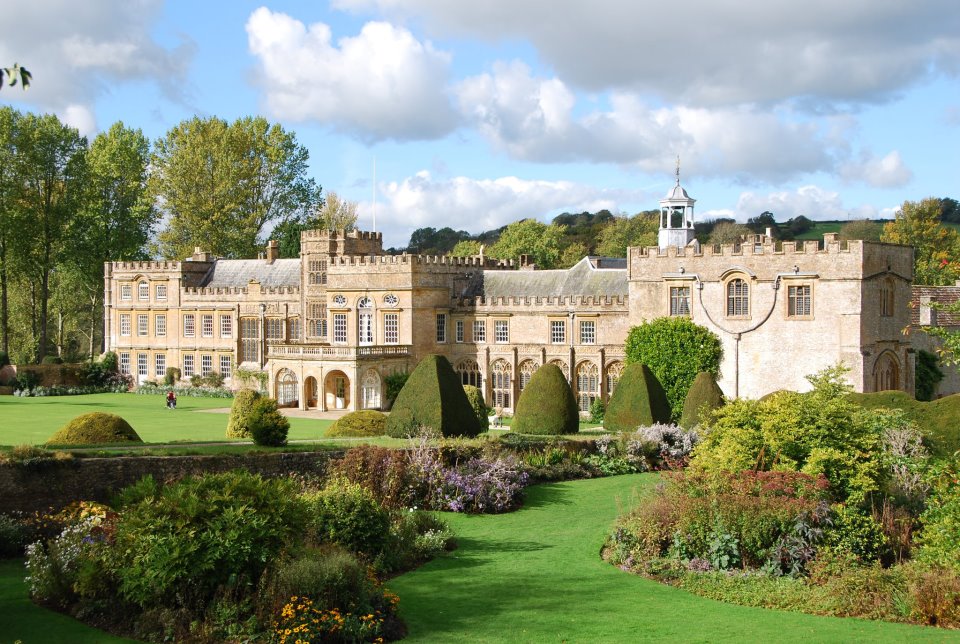
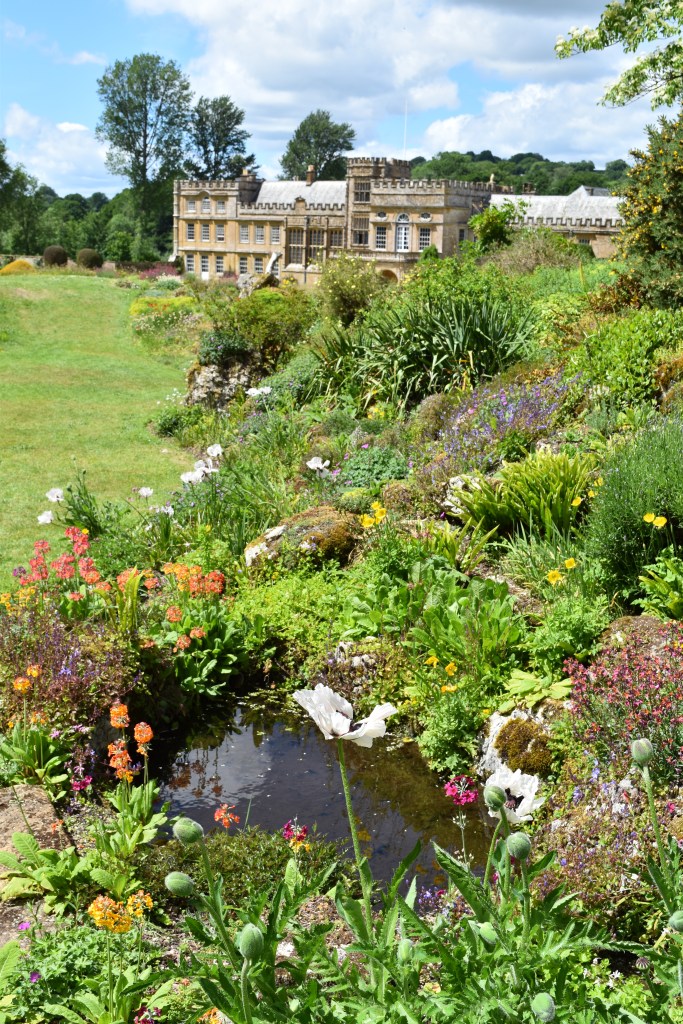
The building was quickly leased out and suffered from many years of neglect through absent landlords until Edmund Prideaux, MP for Lyme Regis and a staunch Parliamentarian, took control in 1649. It was Prideaux who effectively built what we see today with its iconic south front – a conglomeration of medieval gothic, and Jacobean architecture, all in the wonderful Ham Hill stone. The crenellated parapets which dominate the full width of the south front give the building its sense of unity.
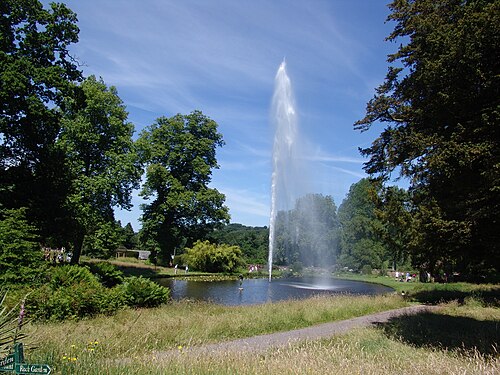
From the eighteenth century there have been a series of owners who have maintained the building making few changes but have improved the experience for the modern visitor, each adding superb gardens. One of the highlights in the garden is the centenary fountain which operates twice every day. The centenary fountain added in 2004 is the highest powered water fountain in England reaching 160 feet.
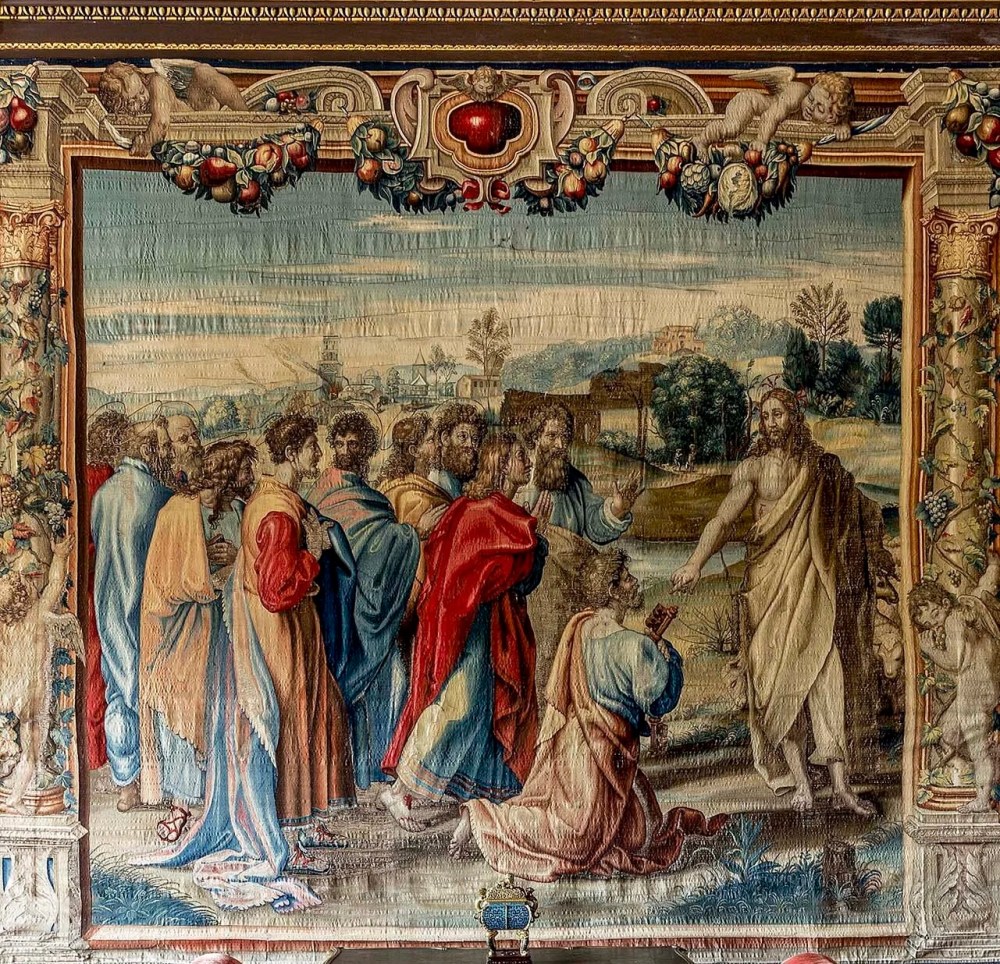
The house is a fine collection of rooms decorated from Jacobean to modern tastes. Worth the visit are the Prideaux Tapestries. These are tapestries from the seventeenth century made in Mortlake, London, from Raphael’s original cartoons which are now in the V&A Museum. The tapestries were confiscated in around 1685 due to Edmund Prideaux’s alleged involvement in the Monmouth Rebellion. They were stored in Whitehall but returned to Forde Abbey during the reign of Queen Anne. The original tapestries are in the Sistine Chapel in Rome.
Unfortunately there is little architecture to represent the modern era, except for a fine new cafe, The Abott’s Table, but there is a good collection of bronze statuary to find representing Alice in Wonderland and Peter Rabbit.
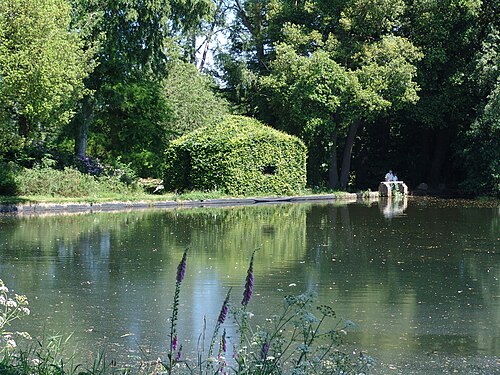
We have been wanting to visit Forde Abbey for a few years now and pleased to have finally made it. Nicklaus Pevsner, noting the extravagance of Bishop Chard’s efforts, said he has ‘built himself a dwelling on a scale to justify the reformation and dissolution. His Great Hall is proceeded by a porch of equal pretensions’. Despite Pevsner’s observation I have made it my building of the month and recommend to anyone visiting the West Country to see this great piece of heritage and enjoy the gardens.
j


I found the information and history really interesting, and the photos beautiful.
LikeLike
Thank you, Luisa. We both hope you are well. Are you spending summer by the lake again? Gordon.
LikeLiked by 1 person
Thank you so much, Gordon and Susie.
I don’t know if I’ll be able to go to the lake next summer, because my old dog, Sissi, isn’t well, and she never liked the apartment in Colico.
LikeLike