Barbara Hepworth, despite being born in West Yorkshire, is synonymous with St Ives, living in that West Cornish town for thirty five years from the outbreak of the Second World War. She was already an established sculptor by then and a pioneer of British abstract art. She set up her studio, Trewyn, in 1949 in the centre of the town and it became a hub for the St Ives artists, a school of modern British avant-garde painters.
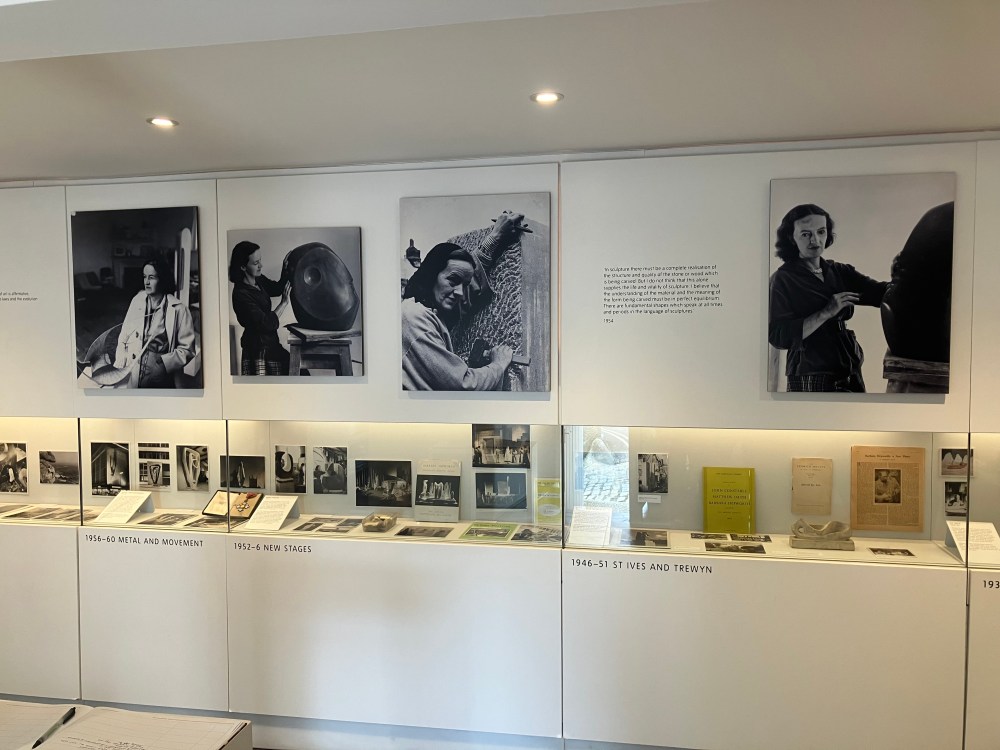
Trewyn is now open as a museum dedicated to the life and works of Barbara Hepworth. The opening room is a collection of memorabilia and quotes assembled to celebrate her life as a sculpture from her early days in Wakefield to her being on the world stage with works in many major cities. The exhibits are framed with many of Hepworth’s quotes which explain her art in her own words. “All my early memories are of forms and shapes and textures. Moving through and over the West Riding landscape with my father in his car, the hills were sculptures; the roads defined the form.”
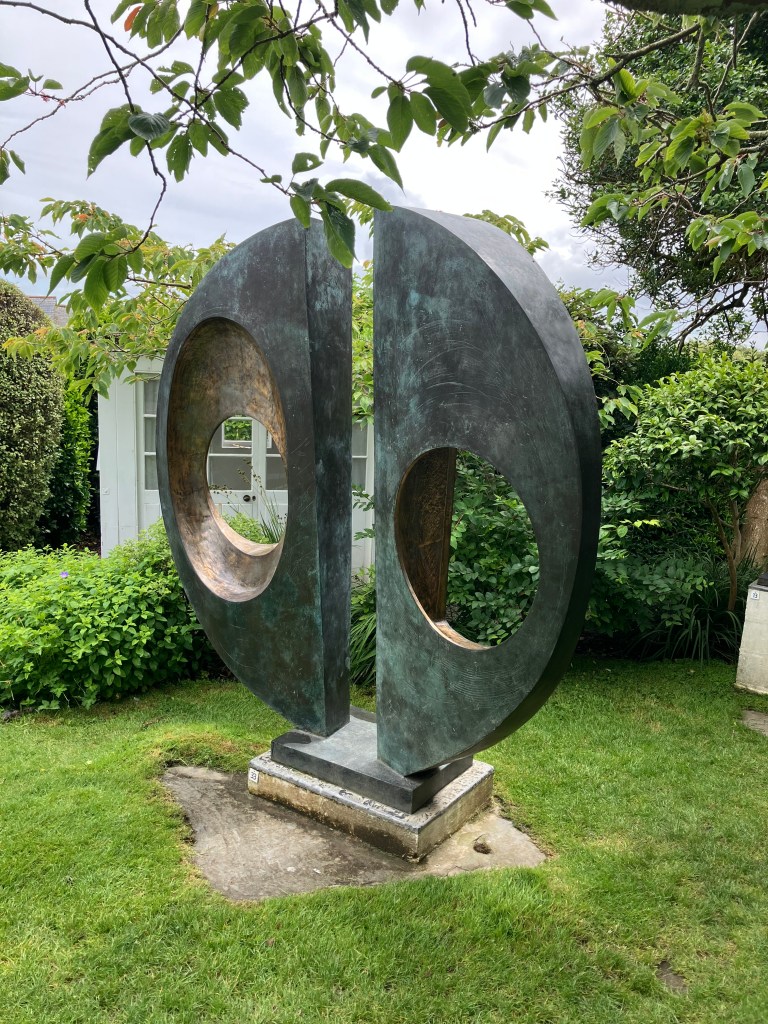
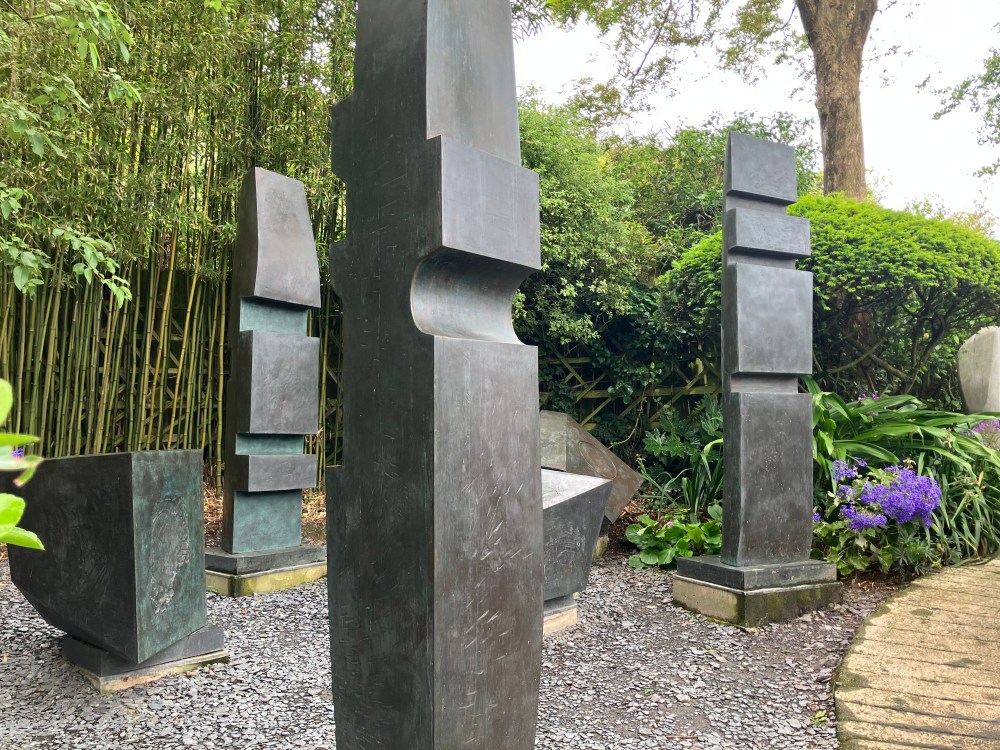
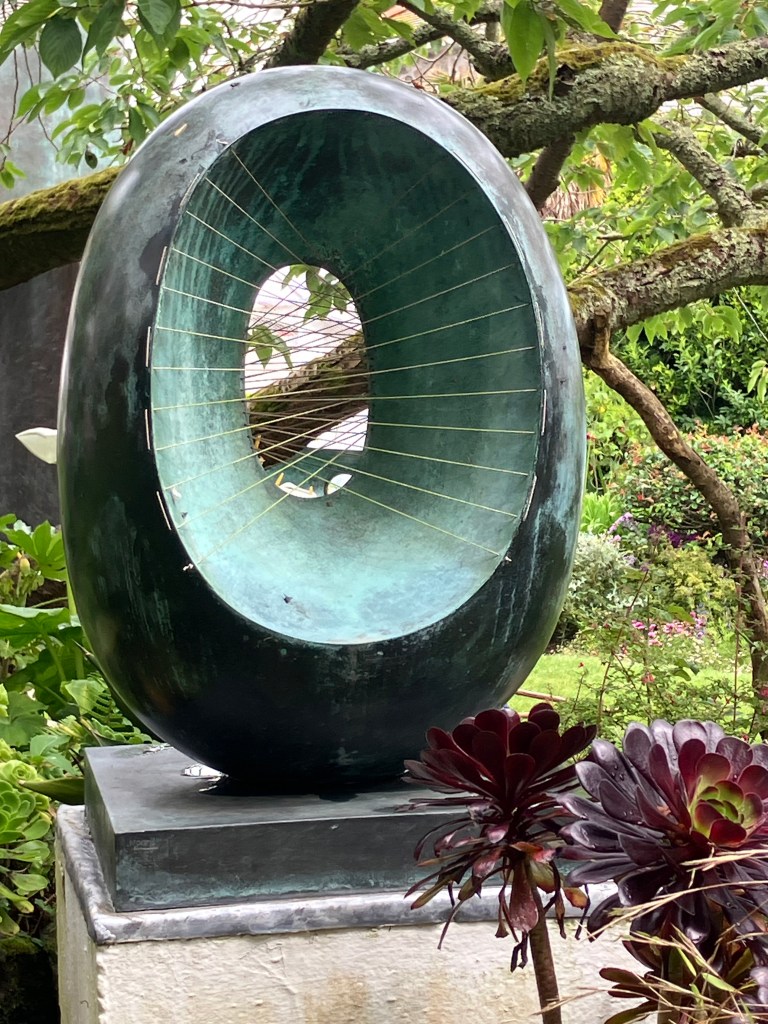
Outside are the gardens, immaculately maintained displaying some of the wonderful bronzes produced at her peak of fame in the 1960s. They range from the massive Two forms (1969) to the more delicate Oval Form (1963) with its piecing and strings – both characteristic ideas of Hepworth’s. Many of the sculptures in the garden are purely Cornish inspirations such as her Conversation with Magic Stones (1973). Again from the artist, herself, “I gradually discovered the remarkable pagan landscape that lies between St Ives, Penzance and Land’s End, a landscape which still has a very deep effect on me, developing all my ideas about the relationship of the human figure in the landscape.”
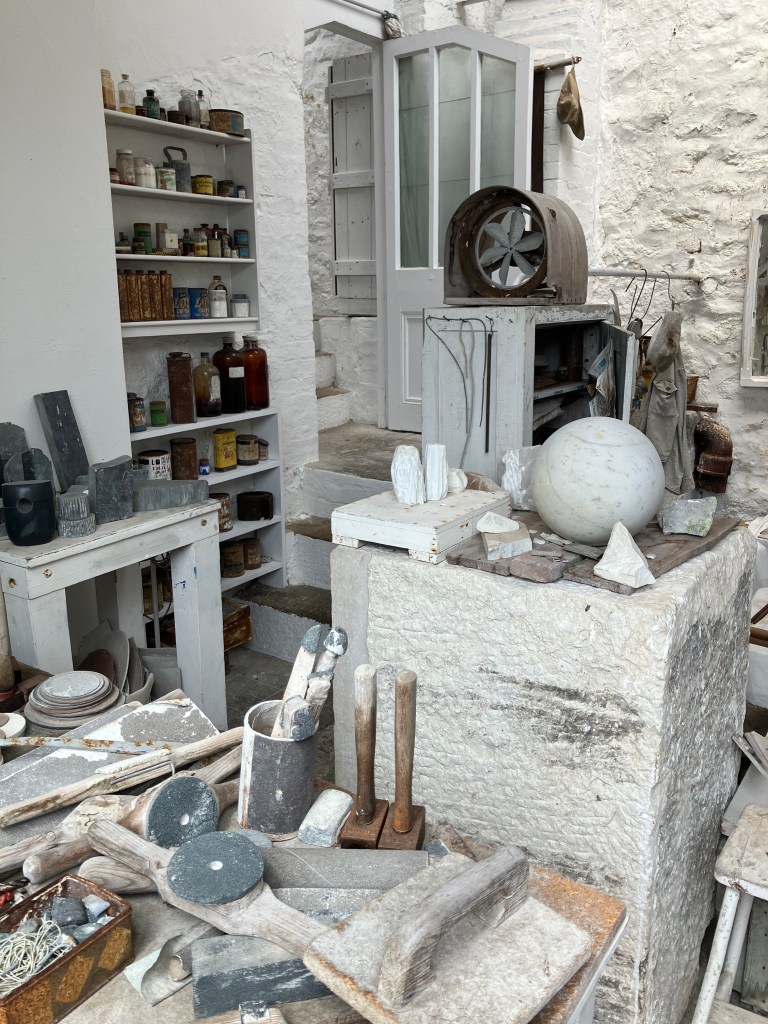
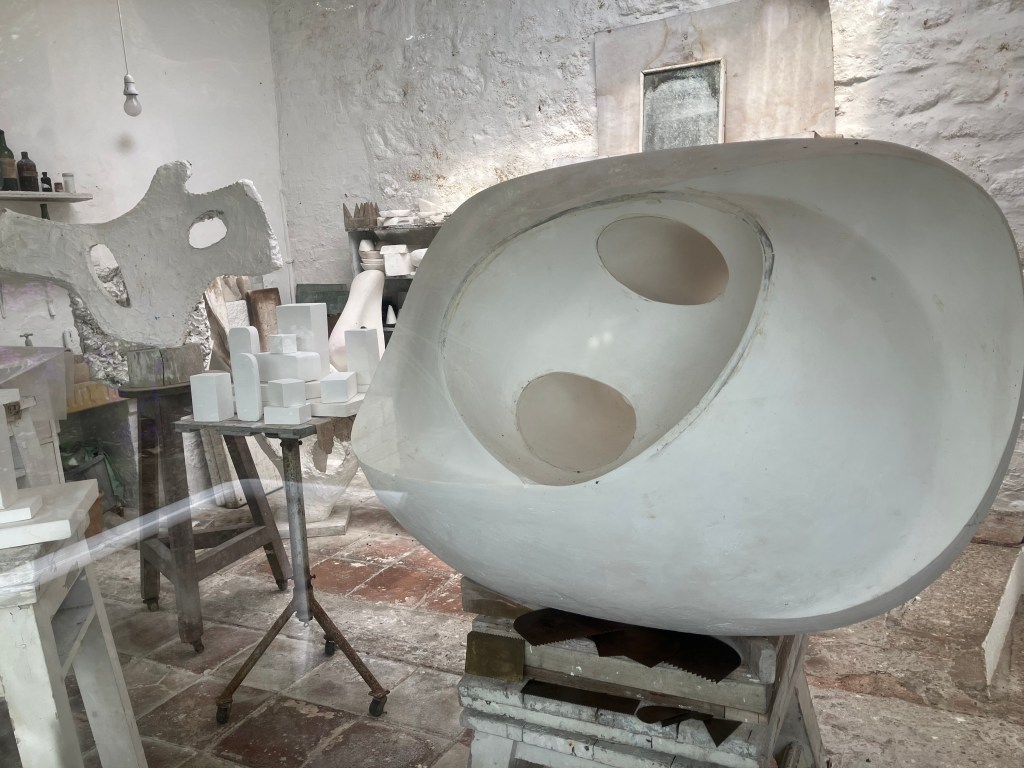
To me the most emotional part of the experience was seeing her studio set out as it was left in 1975. The lower portion contains her tools, coats, plasters and small objects, presumable preparations for maquettes . Then, the upper studio with larger plasters being prepared ready for transport to the Morris Singer Foundry in Basingstoke. As I stood and looked I could almost understand what work she was preparing for the following day, that fateful night in May 1975 when fire consumed her and her plans.
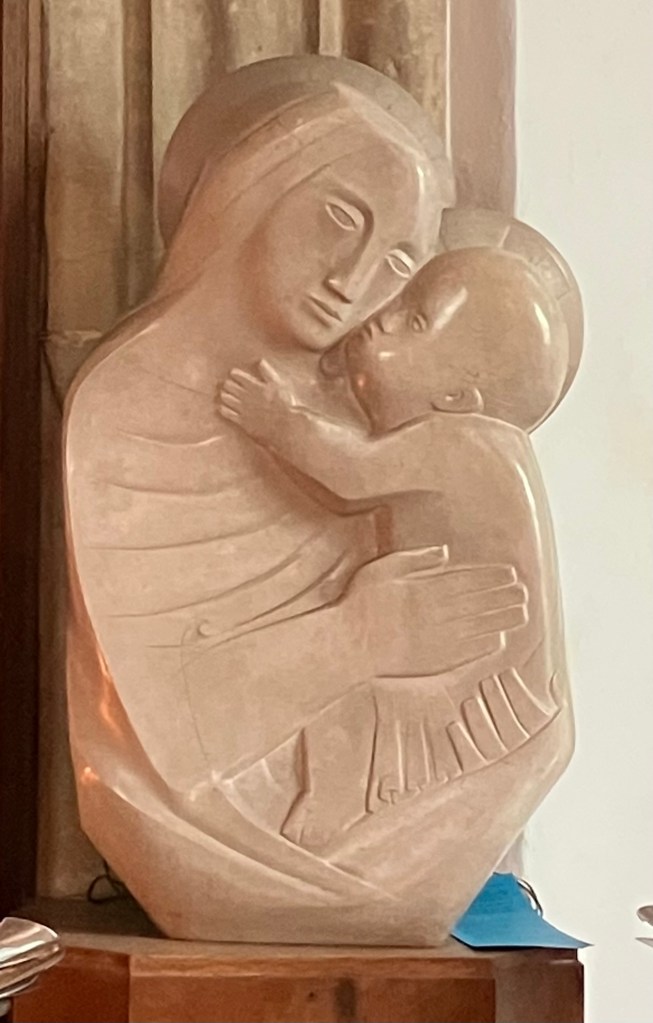
It was the Hepworth Wakefield which brought Barbara Hepworth’s work close to me. I had chosen the building for my dissertation at Oxford and was studying David Chipperfield’s wonderful architecture. In doing so it was inevitable I had to study her life and works to understand the architect and the artist. It had not been possible for me to get to St Ives then, in 2018, but the wait to visit Trewyn has been worth it. A memorable museum and Garden. We also visited the parish church to see Hepworth’s Madonna and Child in the Lady Chapel, a rare figurative study.
I could write thousands of words on Barbara Hepworth and St Ives artists but here are just a few links: Art & Life at Wakefield, Cornwall as Crucible, Patrick Heron at Margate and Hepworth at Henley on Thames.


thanks for the info !
LikeLike
Thanks, Did you get to Ely Cathedral on Monday?
LikeLike
Yes – we did – the Octogon Tower is stunning. We had an excellent guided tour. We did not have time to visit the stained glass museum – maybe next time.
LikeLike
Indeed. I had forgotten about the lantern when I wrote the other day.
LikeLike